Serving Aventura, FL & nearby
(786) 592-4025
Aventura, FL

What Aventura's 1953-1992 Housing Stock Means for Your Garage Door

Most Aventura homes were built between 1953 and 1992, before modern insulation codes - here's what that means for garage doors in this mild, coastal climate.

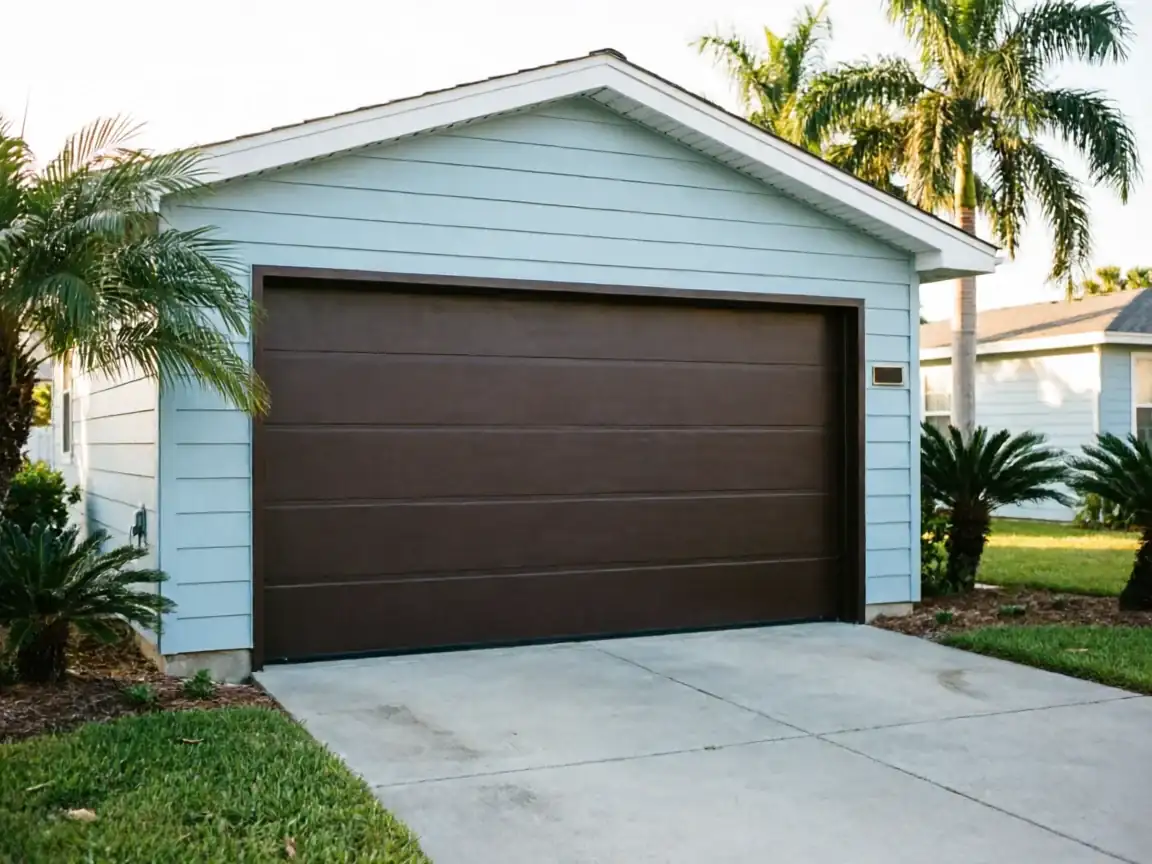
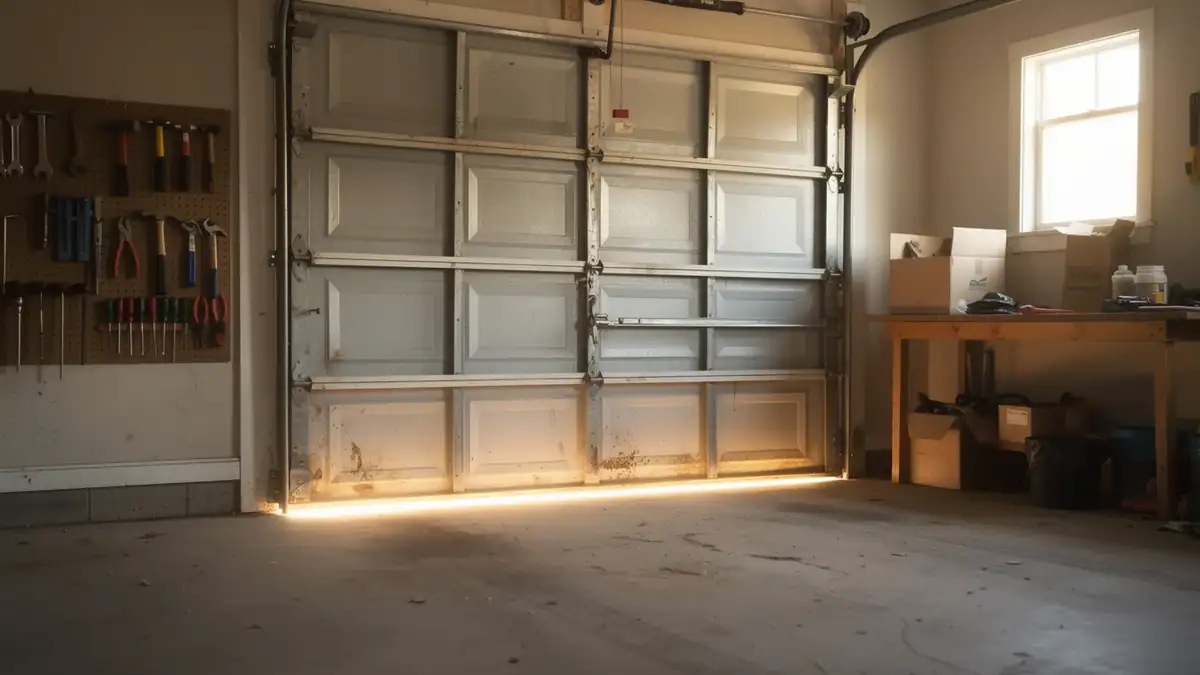
A closed garage door with a bright line of light shining underneath it.

Leaving It Alone

Half the garage doors in this service area went up on houses built between 1953 and 1992, with the median landing around 1971 - years before any insulation requirement touched residential doors. That doesn't mean every one of them needs to come out. A single-layer steel door from that era, if the panels aren't rusted through and the hardware still tracks straight, can keep doing its job for years. We don't push a full replacement just because a door lacks foam backing. If the spring is rated right, the rollers turn without binding, and the bottom seal still meets the slab, an uninsulated door is a cosmetic and comfort question, not a safety one. The honest version of this page is that plenty of calls we could turn into a sale are really a ten-minute cable adjustment or a new bottom seal. If your door opens and closes square, holds its position, and isn't dragging roller noise through the house, leave it alone. Spend the money when something in the track or torsion system actually fails, not on the calendar.

What Local Conditions Do

Aventura sits in a mild temperate band, so these old steel panels aren't fighting freeze-thaw cycles the way a door in a northern climate would. No ice forming in the track, no metal contracting hard enough to crack a weld overnight. What the climate here does instead is keep humidity steady year-round, and on an uninsulated single-layer door that shows up as condensation on the inside face rather than frost damage on the outside. Over decades that moisture works on the bottom corners and the hardware fasteners before it works on anything else. That's a slower failure mode than what cold-climate doors see, which is part of why so many original doors from the 1960s and '70s stock are still running. It also means the fix, when one is needed, is usually a hardware and seal job rather than a structural one - springs lose tension from cycle count and heat, not from frozen moisture locking up a torsion bar. We don't see the kind of sudden winter cold-snap failures that drive emergency calls elsewhere, so most jobs here are gradual wear, not a single bad morning.

The Situation

Across the 28 named areas that make up this market, the bulk of the housing stock dates to the 1960s and '70s, with the broader range running 1953 to 1992. Doors from that build window were put in before any energy code asked for an insulated section, so what's hanging in a lot of these garages is a single layer of steel over an open frame, matched to whatever spring and opener hardware was standard at the time. With 42,128 owner-occupied houses out of 164,090 households in the service area, that's a meaningful share of original or early-replacement doors still in daily use, not a handful of outliers. What that means practically: panel thickness, track width, and spring winding specs on these older doors often don't match what's sold off the shelf today, so a repair sometimes means sourcing hardware to fit the original opening rather than grabbing a universal part. It's not a problem, just a step that needs the make and age of the door before a truck rolls, otherwise you're paying for a second visit.
Where People Go Wrong

The most common mistake we see is treating an insulation retrofit kit as a cheap stand-in for a full replacement on a door that's already failing somewhere else - rusted bottom corners, a bent track, a spring near the end of its cycle life. Foam board stuck to the inside of a panel doesn't fix a door that's out of square, and on a thin single-layer steel panel from the 1960s or '70s it can actually trap moisture against metal that was never meant to hold it. The other mistake, on a $59,989 median household income here, is swinging the other way and replacing a sound door outright because it looks dated, when the actual complaint is noise or draft that a new bottom seal and a lubed roller set would solve for far less. Match the fix to what's actually wrong with the door - its age alone isn't the diagnosis. We'll tell you straight if a repair isn't worth it, but we won't sell a teardown on a door that just needs its seals redone.

How it works

From “it’s stuck” to “it’s fixed”

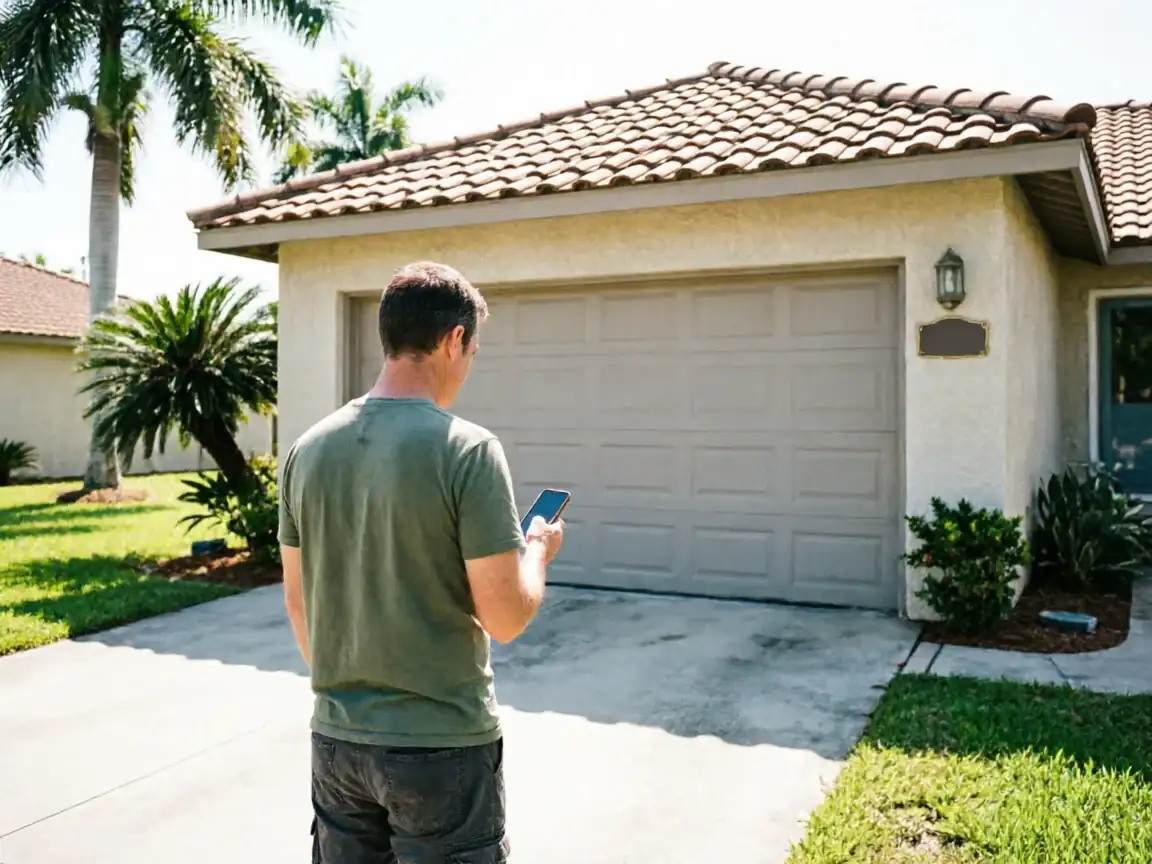
A man stands in a driveway looking at his phone in front of a closed garage door.

Tell us what’s wrong

Describe the symptom - won’t open, loud bang, opener runs but the door won’t move.

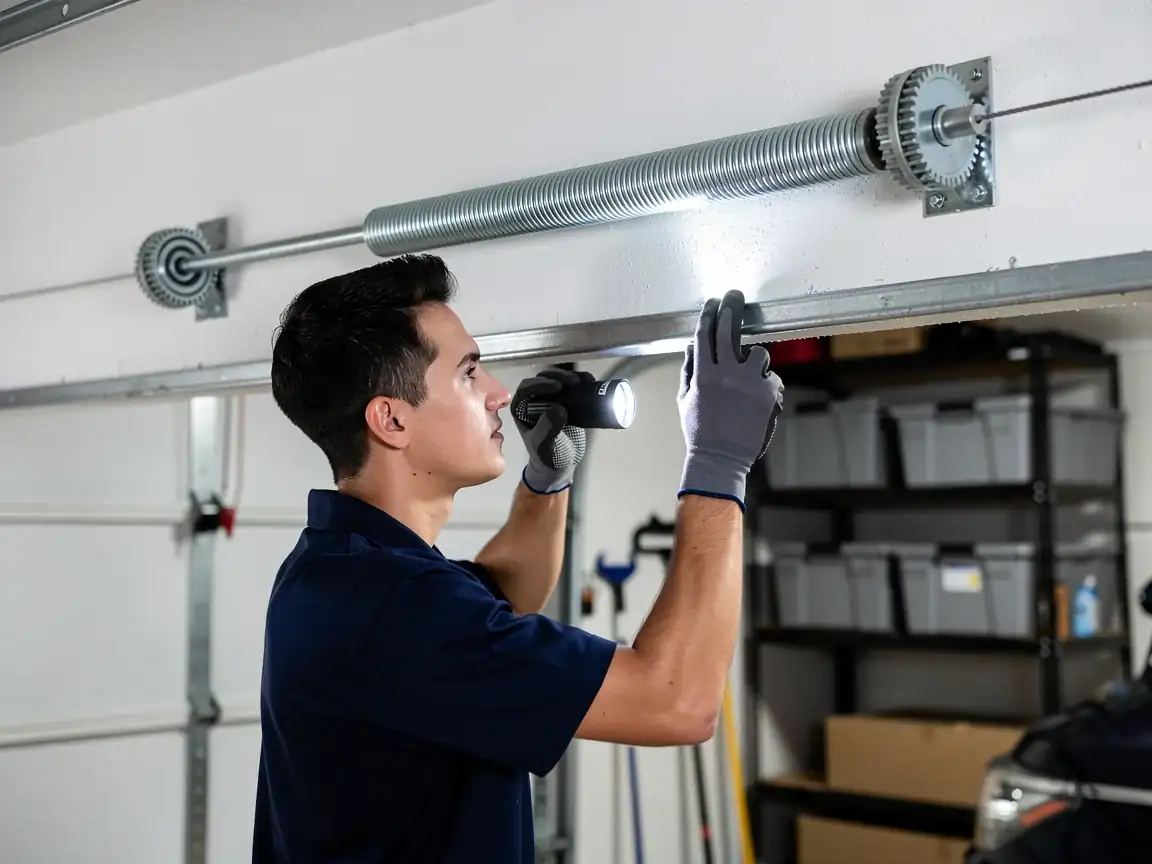
A technician in a blue shirt and gloves inspects a garage door track with a flashlight.

On-site diagnosis

A technician tests the door under power and by hand and finds what actually failed.

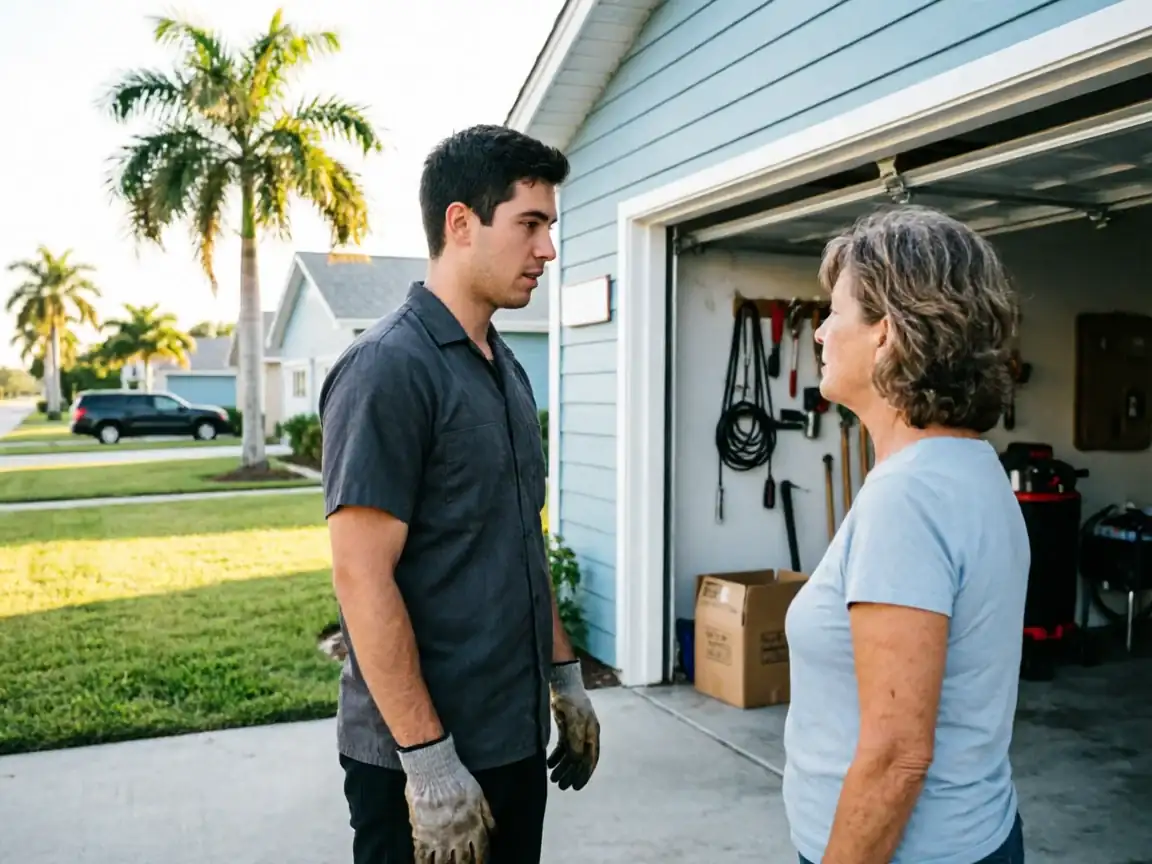
A technician wearing gloves talks to a woman in front of an open garage.

Clear, up-front plan

You get the fix that’s needed and what drives the cost - before any work starts.

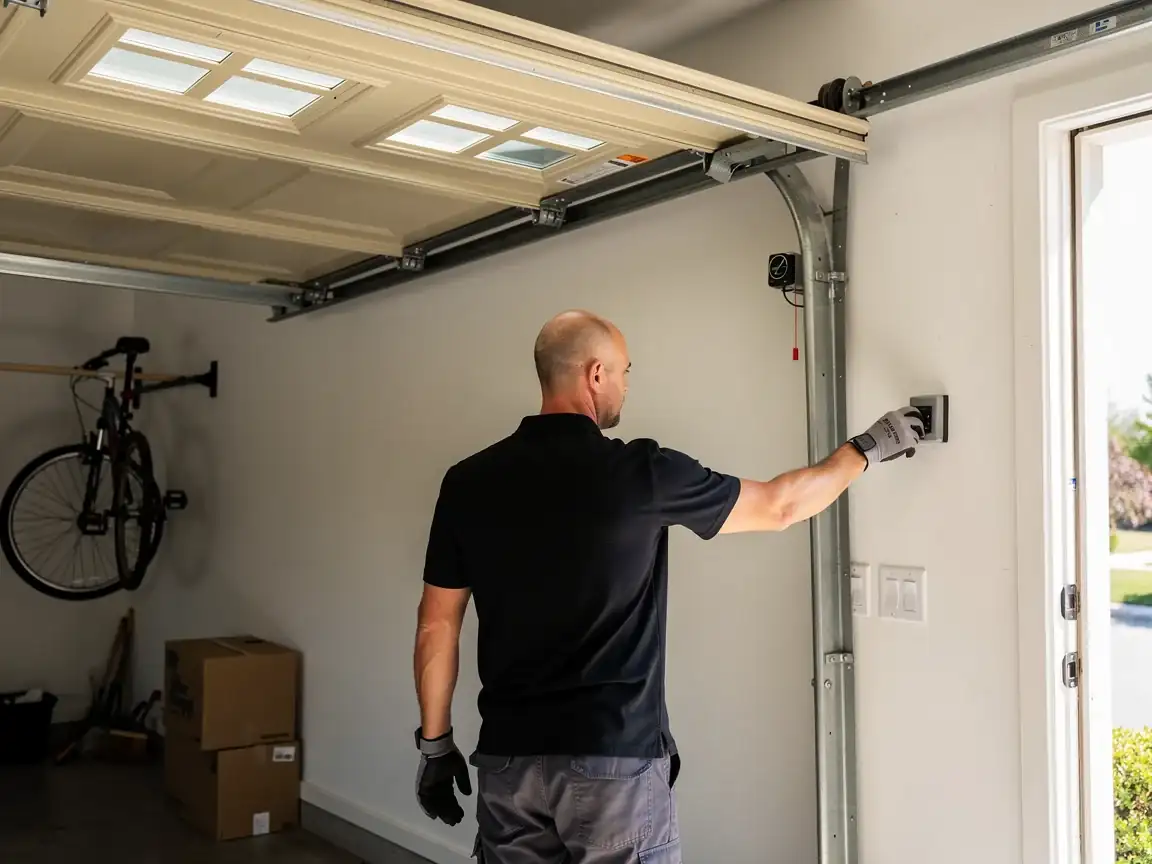
A technician in gloves presses a button on a garage wall.

Repaired & tested

The repair is done, the door is set true and tested, and the work area left clean.

Not sure which repair your door needs in Aventura, FL? Describe what it’s doing - every job starts with a diagnosis.

How we work

What to expect

Diagnosis firstEvery visit starts by finding what actually failed - not a pre-written parts list.
The right part for the doorSprings and openers matched to the door’s weight and age, so the fix holds up.
Straight answersWhen a repair makes more sense than a replacement - or the reverse - you hear it plainly.
Clean, careful workTension released safely, hardware set true, the door tested under power before we leave.
What we do

Garage Door Services

Repair and installation work for Aventura homes and businesses.

Questions

Frequently asked

Straight answers about garage door repair in Aventura. Still unsure? Ask us directly.

Is my garage door too old to repair if the house was built in the 1960s or 70s?

Not usually. Most of the housing stock in this service area dates from 1953 to 1992, median around 1971, and a lot of those original doors are still running fine mechanically. Age alone isn't a reason to replace - rust through the bottom panel, a bent track, or a spring that won't hold tension are. We check the door itself before recommending anything.

Does my uninsulated door need to be replaced for energy reasons?

Not necessarily. Aventura's climate is mild and temperate, so an uninsulated door isn't fighting the same temperature swings a door in a colder region would. It can still make the garage warmer and transmit more outside noise, but that's a comfort trade-off, not a code requirement, since these doors predate residential insulation rules.

Can I just add a foam insulation kit to my old door instead of replacing it?

Sometimes, if the panel itself is sound - no rust-through, no bent sections, track still straight. On an older single-layer steel door a foam kit can add comfort and some noise reduction. It won't fix a structural problem, and on a panel that's already deteriorating, trapped moisture under the foam can make things worse, not better.

Ready to get your garage door sorted?

Tell us what it’s doing and where you are in Aventura - we’ll take it from there.

Request a QuoteCall