How Long You Are Without the Door
A dead garage door usually means one of two things
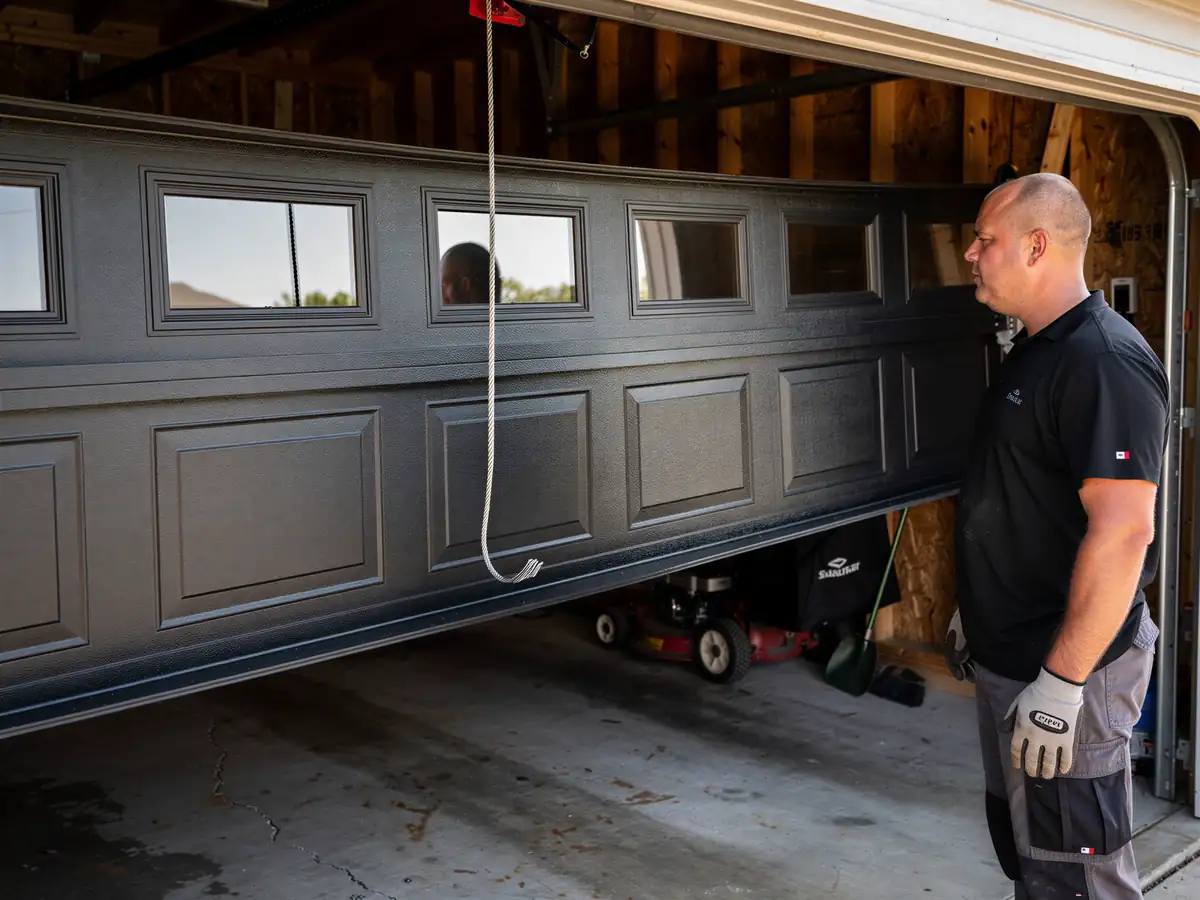
A broken spring that leaves the door too heavy to lift by hand, or an opener that's stopped talking to the track. Either way, the car is stuck until someone with the right tools gets there.
We won't quote you a stock turnaround time here because it depends on the part
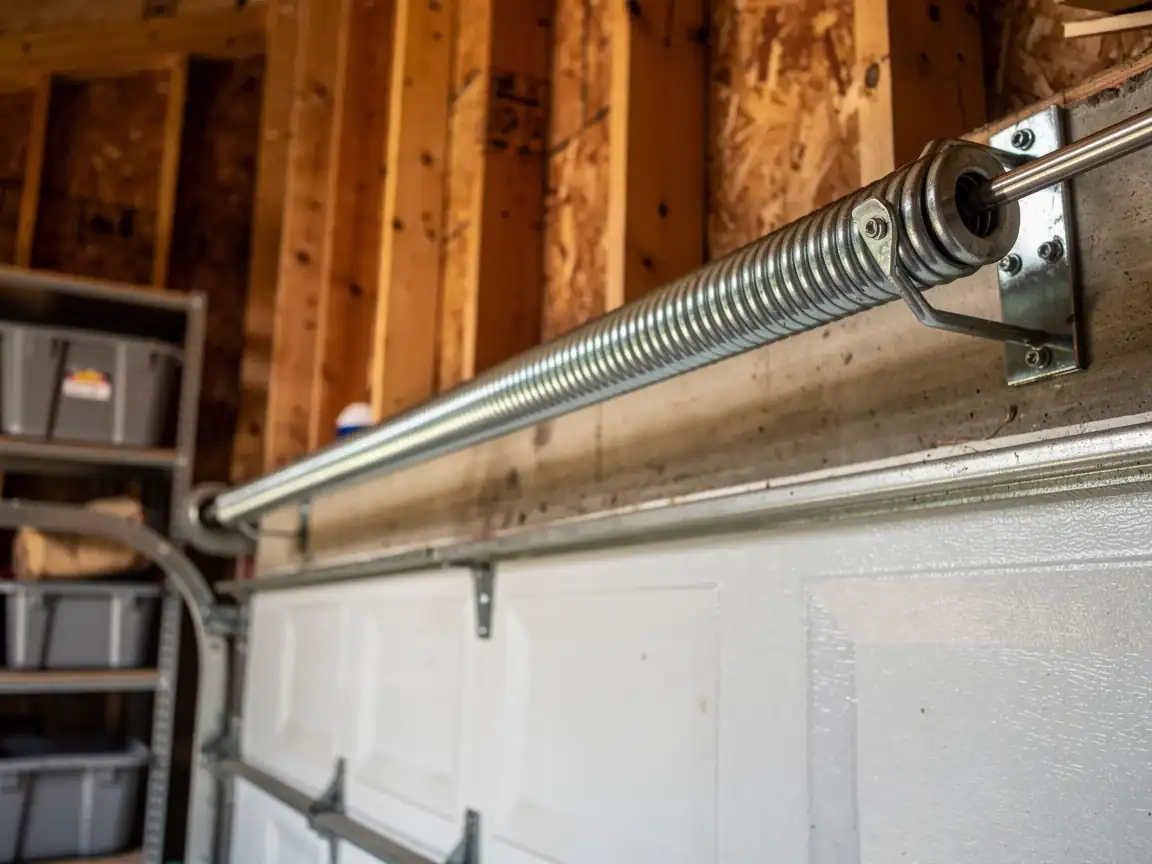
Original torsion springs and track hardware from houses built in the 1953-1992 window - which covers most of this area, with a median build year around 1971 - aren't something a parts counter keeps ten of on a shelf. A common 7-foot spring is a same-trip fix. A legacy track bracket off a house from that era sometimes means a short wait on the part, not the labor.
That's the honest limitation
We can get to the door fast, but we can't promise a part we haven't opened the garage to measure yet. What we can tell you is that the door itself - spring, cable, rollers, opener - is almost always fixable in one visit once we're standing in front of it.
Can You Do This Yourself
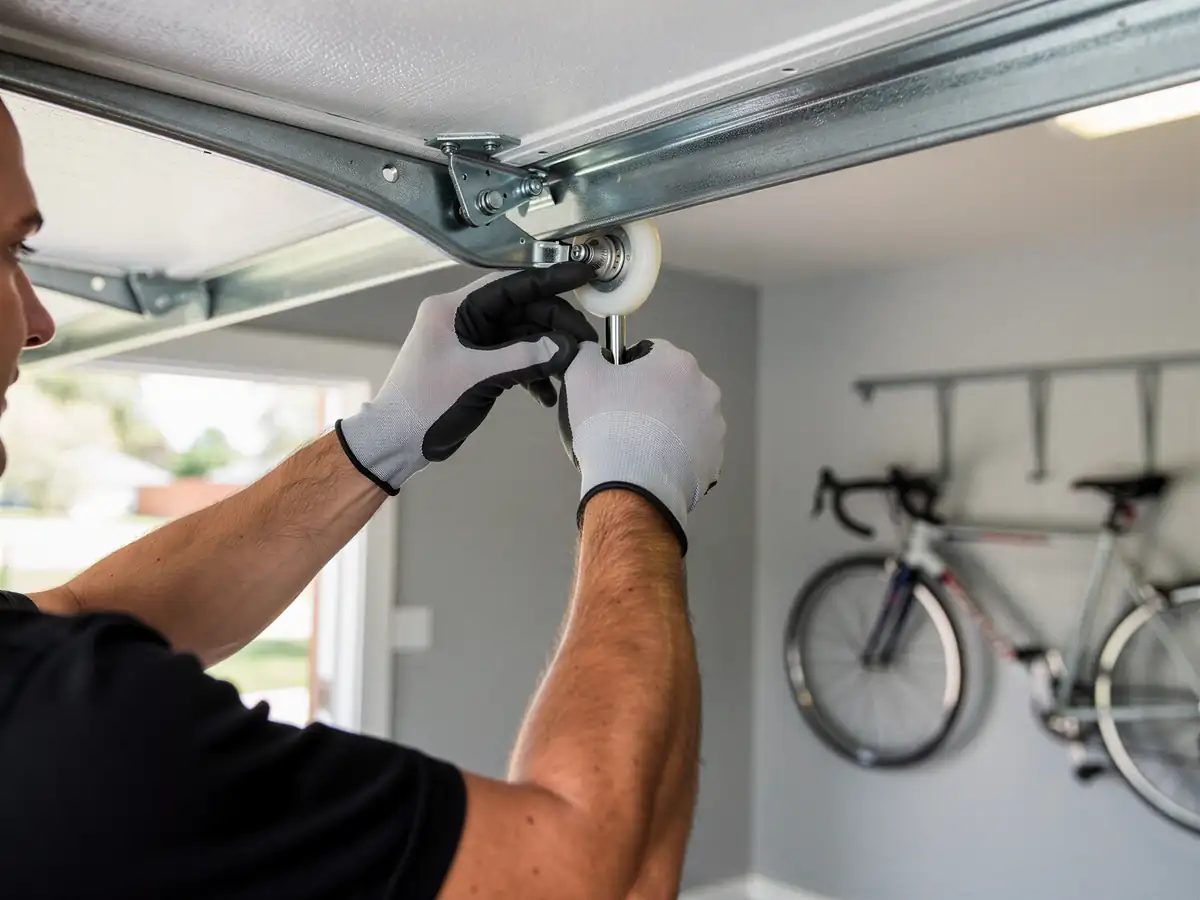
Some of this is DIY. Lubricating hinges and rollers, tightening loose bolts on the track brackets, replacing worn weatherstripping - all fine with a ladder and some patience.
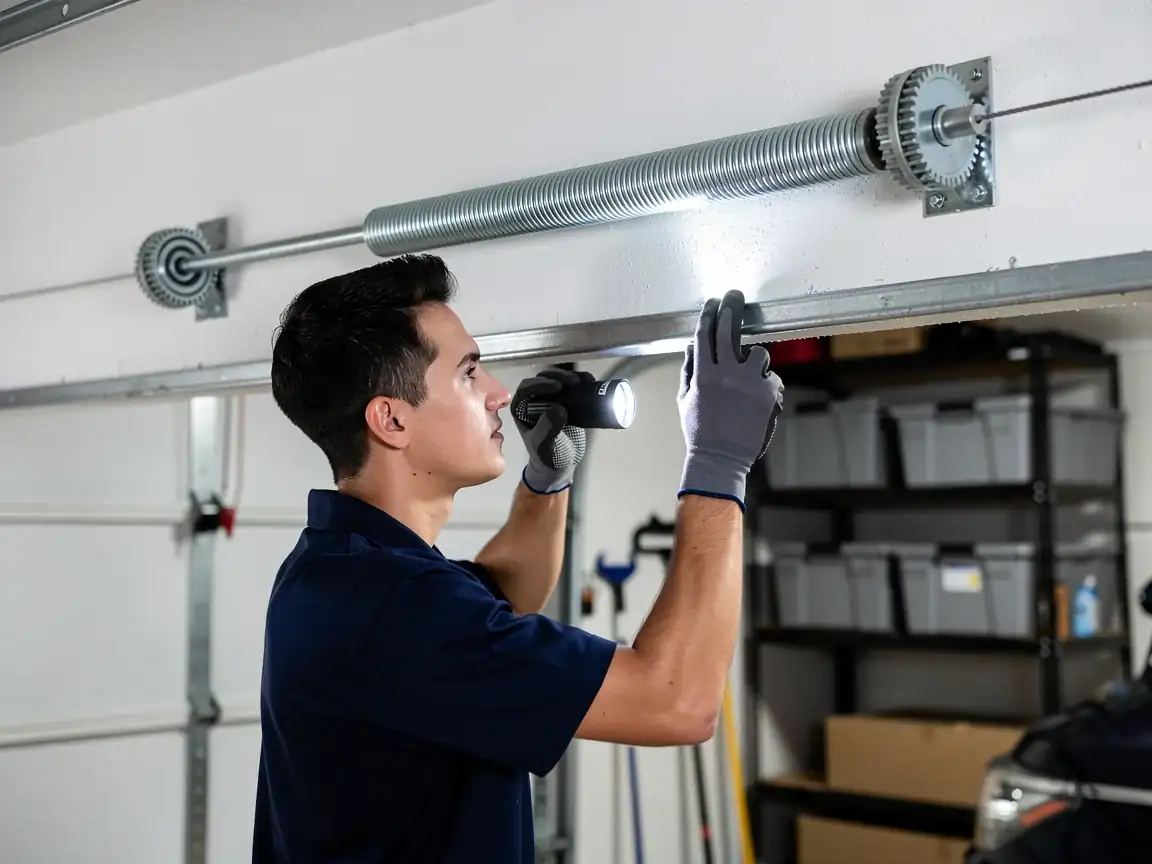
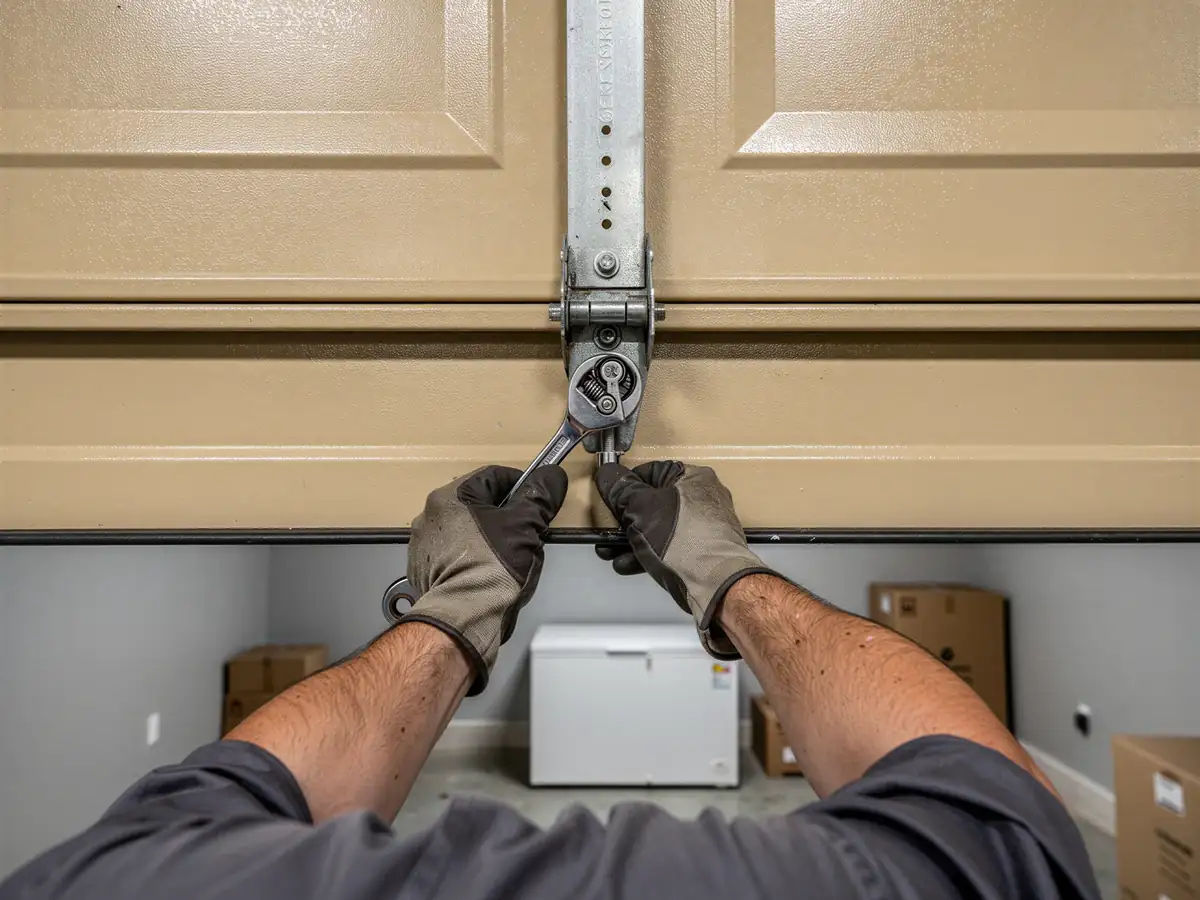
A torsion spring is not in that category. It's wound under enough tension to break a wrist or worse if it lets go while you're working on it, and that risk doesn't change because the door looks old or the spring looks rusted through. Cable replacement carries the same risk for the same reason - the cable is under load as long as the spring is wound.
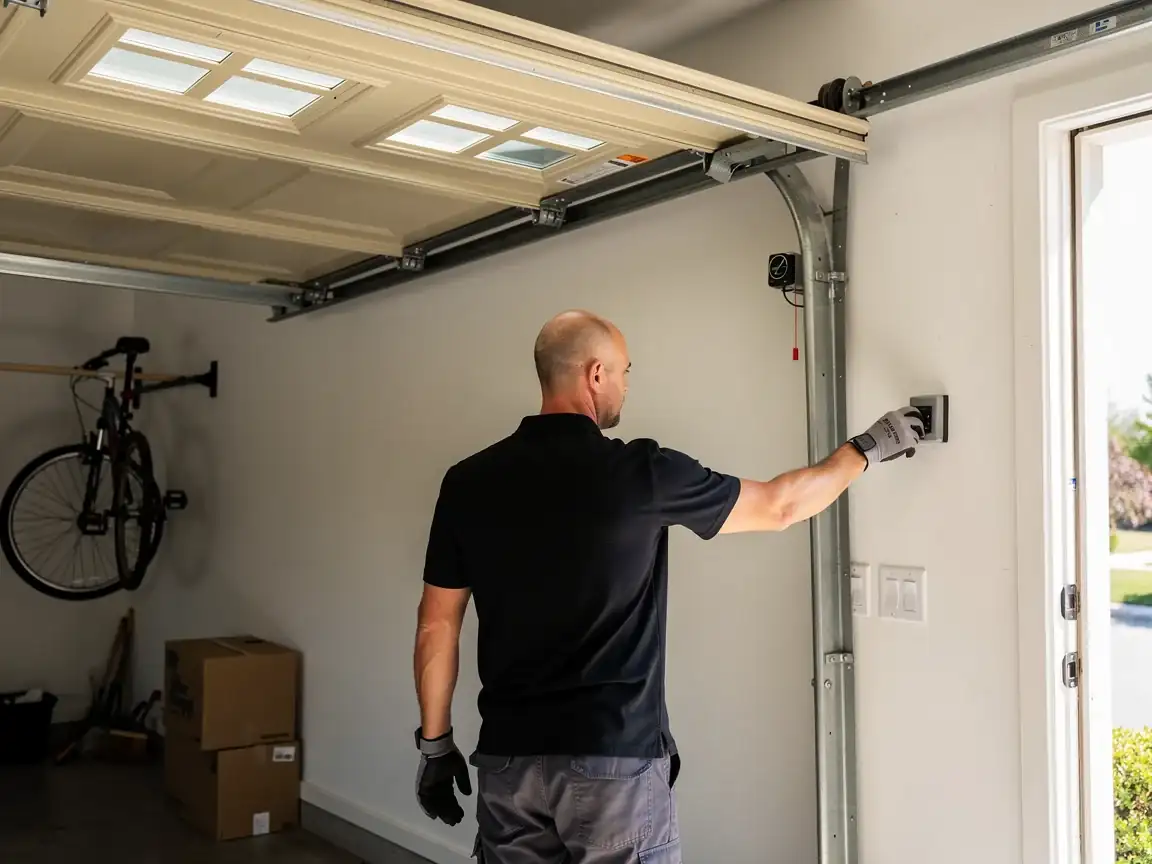
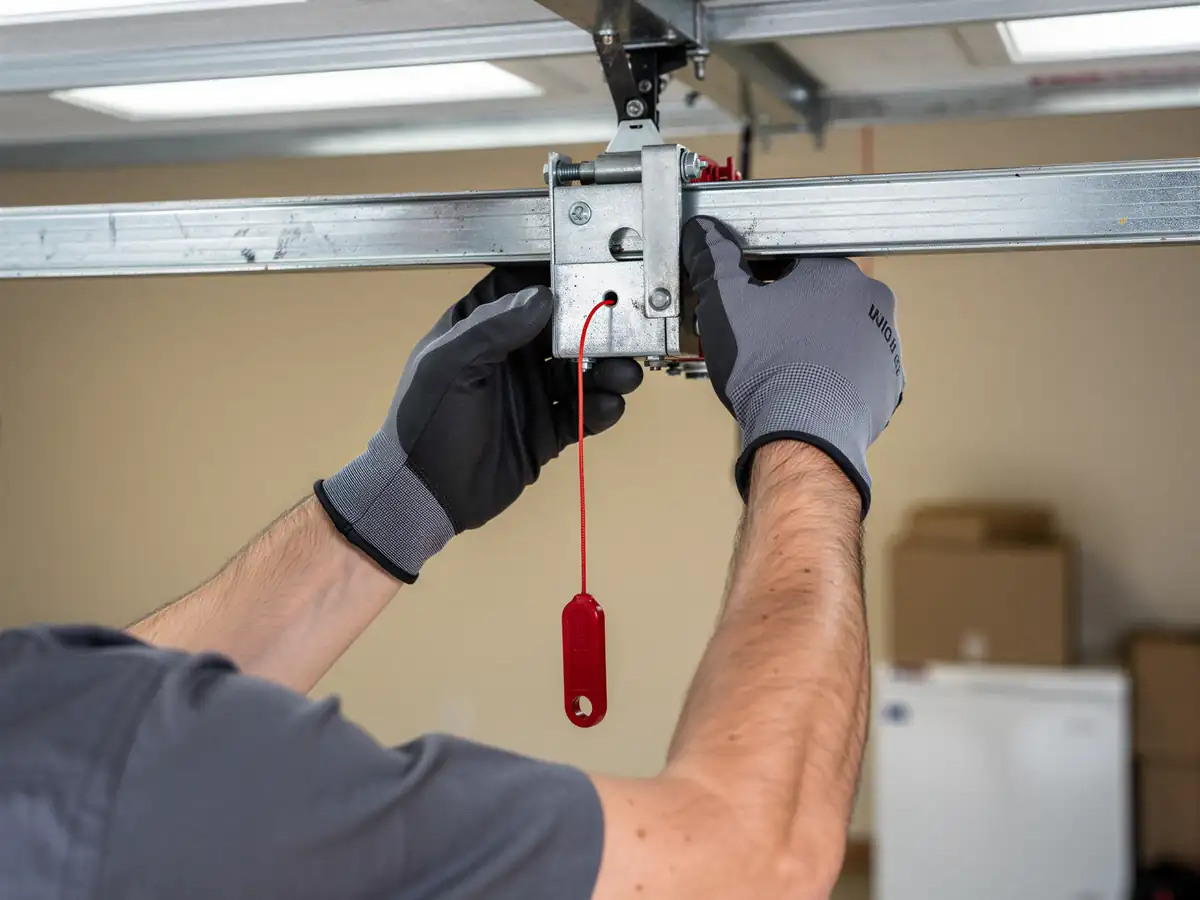
Opener issues are a middle ground. Swapping a remote battery or reprogramming a keypad code is simple. Diagnosing why the opener reverses halfway up, or why it runs but the door doesn't move, usually means checking the drive gear, the limit settings, and the travel sensors in sequence - doable with a multimeter and the manual, slower without either.
If you're not sure which category your problem falls into, that uncertainty is the answer. Springs and cables are a call, not a weekend project.
What Causes It Around Here
The housing stock in this service area mostly went up between 1953 and 1992, with the heaviest concentration in the 1960s and 70s across the 28 named communities nearby. That matters for garage doors because a lot of those original doors and torsion systems have been cycling for decades - springs rated for a certain number of open-close cycles simply run out, regardless of how well they were installed.
Aventura sits in a mild temperate climate band, which actually works in homeowners' favor on one front: hardware here doesn't deal with the freeze-thaw cracking that snaps springs suddenly in colder regions. Failures here tend to be gradual - fatigue, rust creep on an older spring coil, a roller that's worn its track groove wider over twenty-plus years - rather than a single cold snap taking a spring out overnight.
The practical result is the same complaint showing up again and again on older builds: a spring that's been fine for years suddenly isn't, or an opener motor that's been straining against a spring that's lost tension finally burns out. Neither is a surprise once you know the age of the hardware doing the work.
How It Shows Up
On an older door, the first sign is rarely silence - it's noise
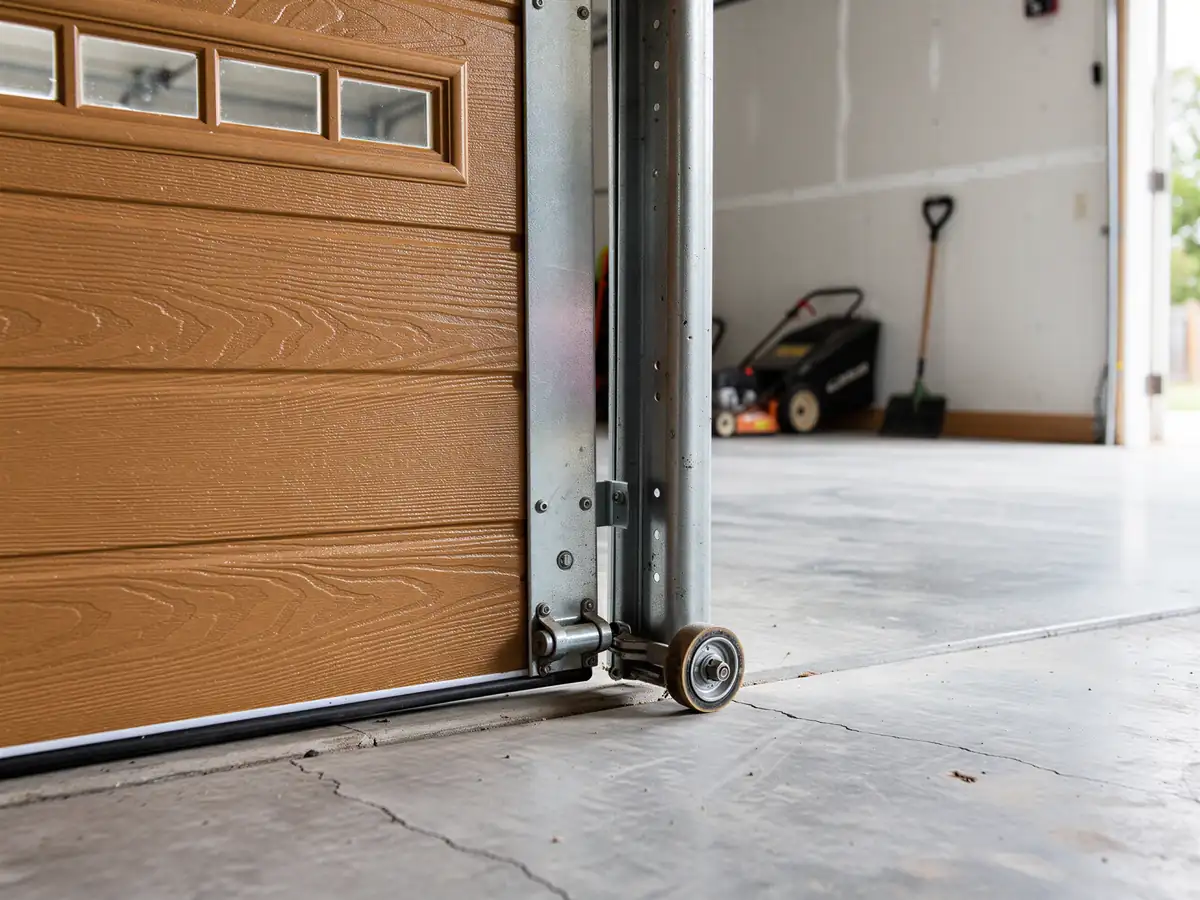
A grinding or popping sound when the door starts to move usually means a roller riding rough in a worn track groove, common on doors original to the 1960s-70s builds that make up most of the local stock.
A door that opens partway and stalls
Or one where the opener motor runs but the door barely lifts, points to spring tension that's dropped below what the opener was ever meant to compensate for. That's the opener straining to do a job gravity and a properly tensioned spring used to share.
Sagging on one side, a door that looks slightly crooked in the frame
Or a cable that's visibly frayed near the bottom bracket are all signs the system's been working harder than it should for a while. None of these show up overnight on a well-maintained door - they build slowly, which is also why they're easy to ignore until the morning the door won't open at all.
If you're hearing new noise or seeing new sag on a door that's original to a house from that era
It's worth a look before it becomes a stuck car and a missed morning.