How Long You Are Without the Door
A door off track doesn't always mean you're locked out of the garage for the day
Sometimes one roller has popped loose on one side and the door still moves, badly, with a grinding sound and a visible gap at one track. Other times a cable has come off the drum along with the track separation, and the door is now a few hundred pounds of metal held by not much at all - that door does not move again until someone fixes it.
We don't have a fixed number to give you for how long a repair takes
Because it depends entirely on which of those two situations you're in and what parts the door needs. A bent section of track that just needs re-anchoring to the framing is a different job than a door that's come fully off both rollers on one side and bent the track itself. If the track is bent rather than just loose, it usually gets replaced rather than hammered back into shape - that's not a shortcut, bent track rarely sits true again once it's been forced.
What we can tell you is this
Don't keep running the opener to try to force the door back on track. That's the single fastest way to turn a one-track repair into a two-track-plus-panel repair.
Can You Do This Yourself
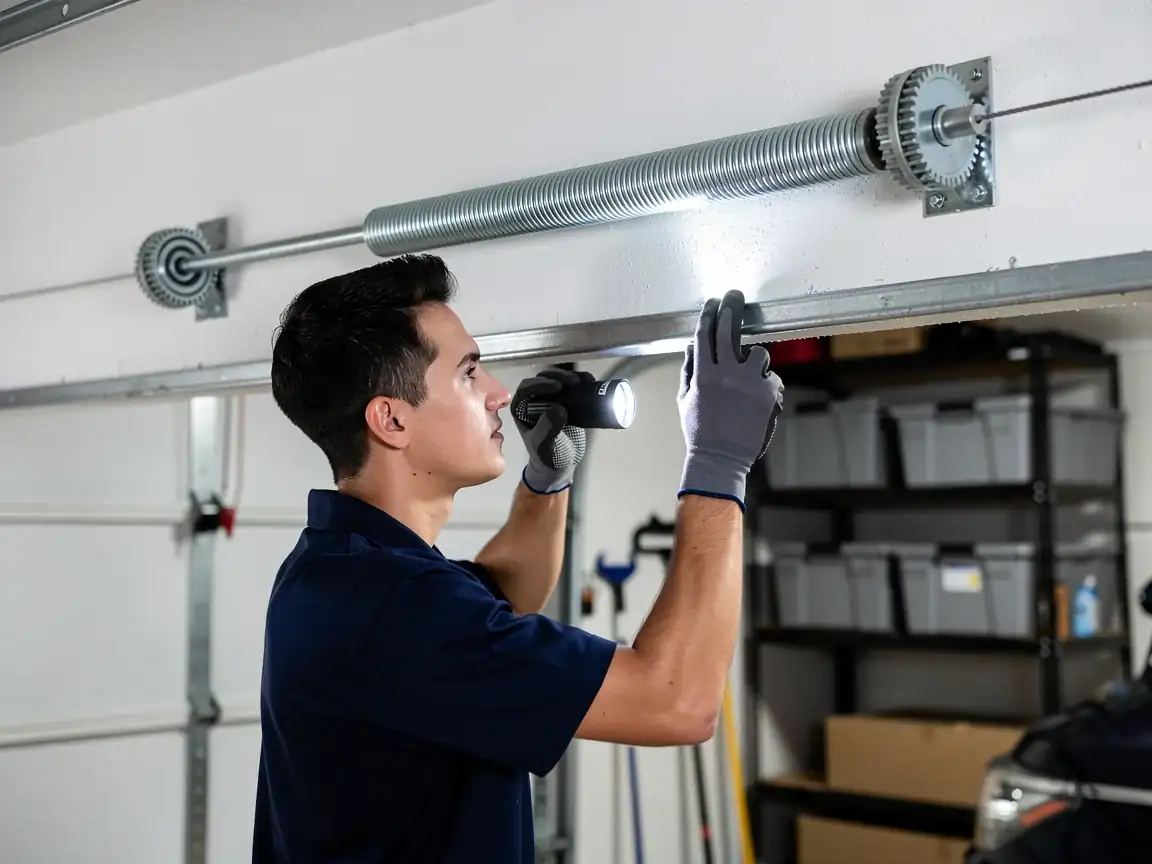
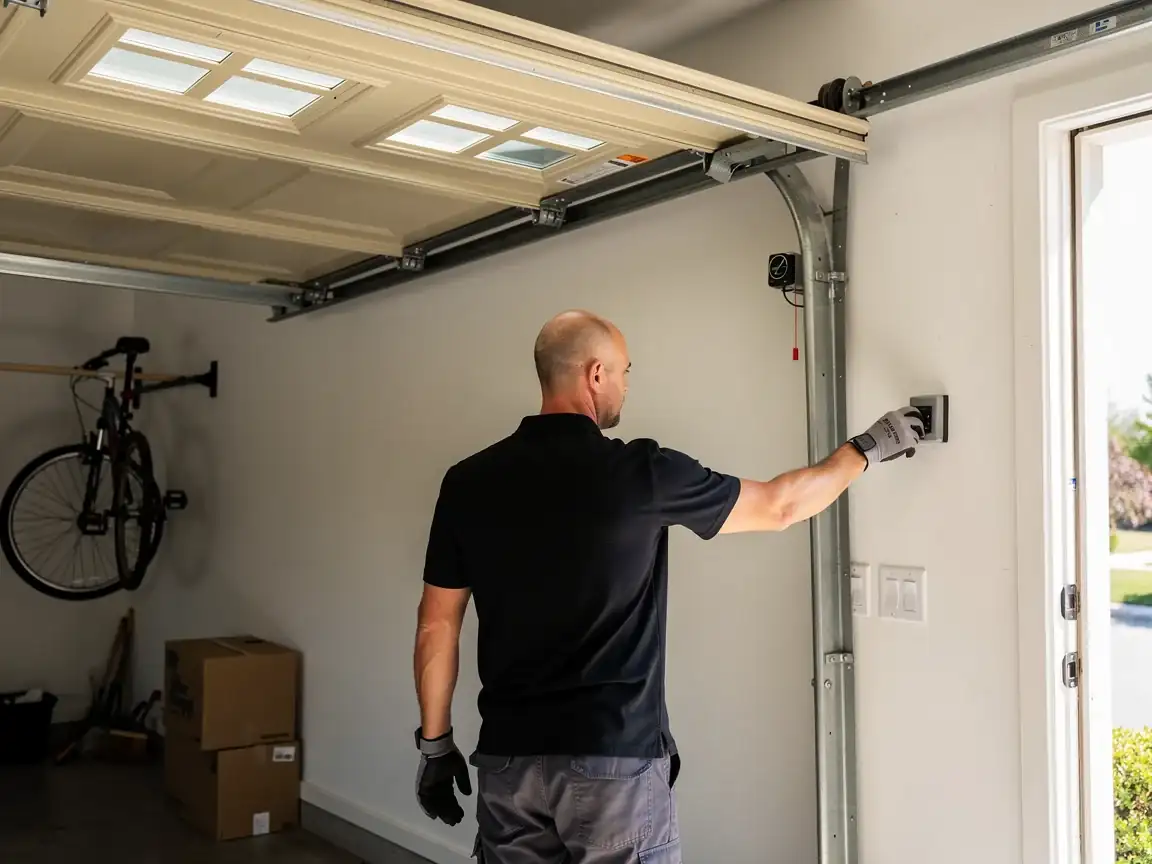
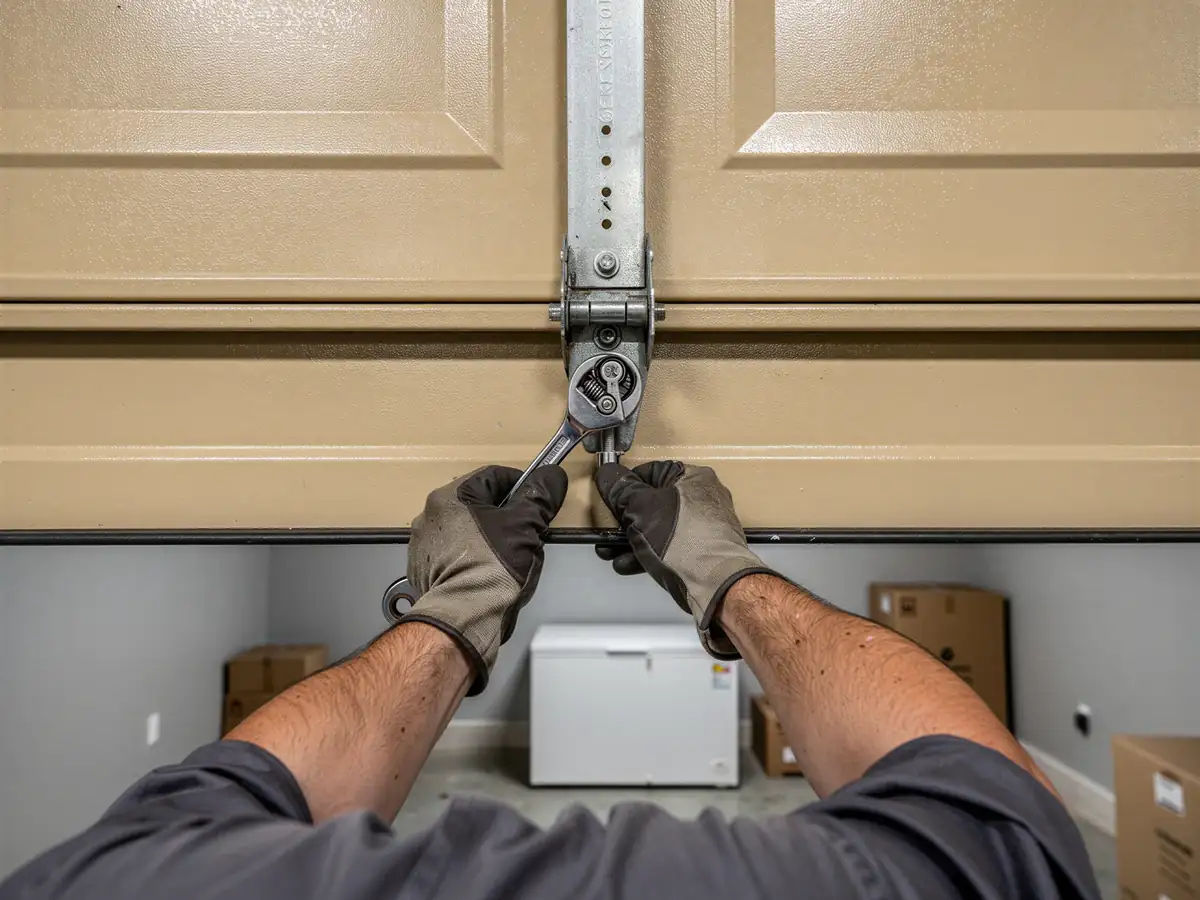
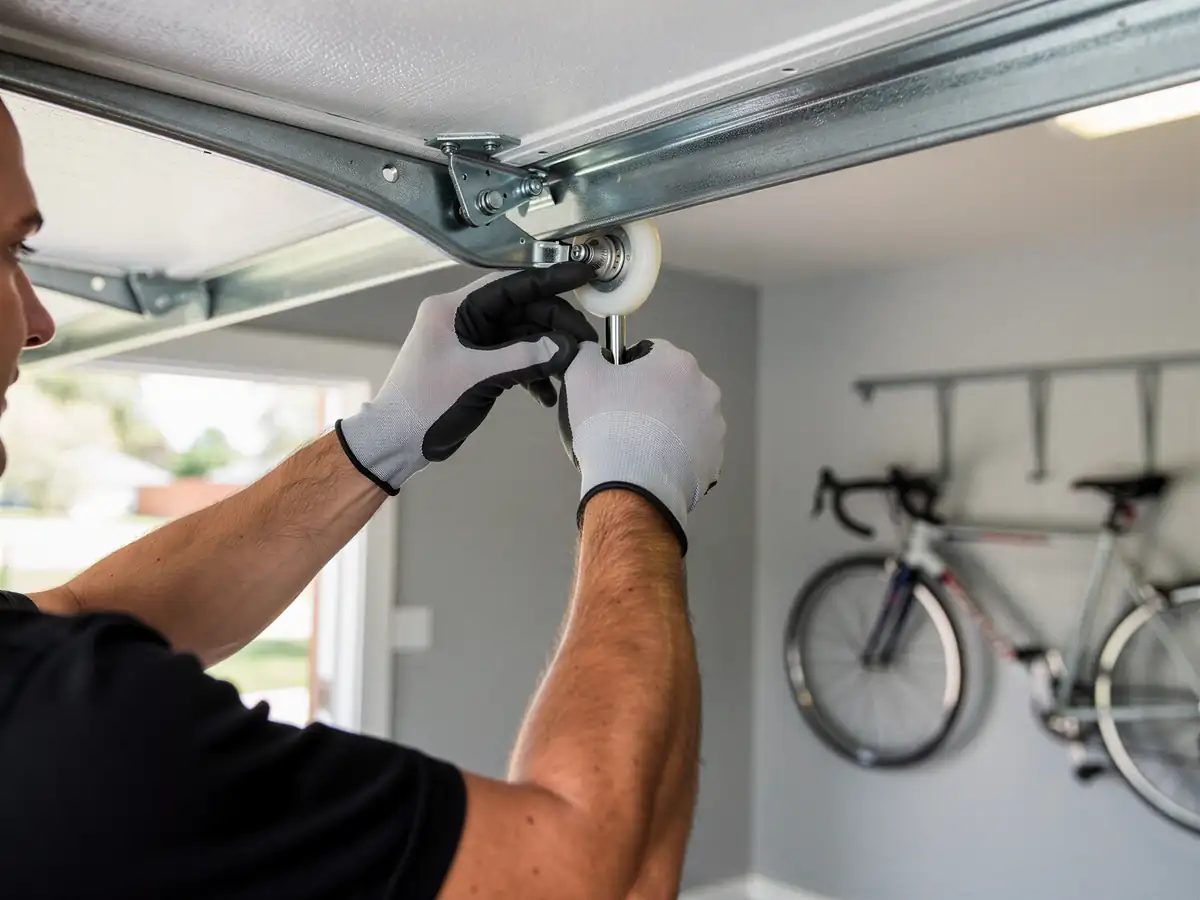
If the door is only slightly off at the bottom roller and the door isn't under spring tension in a weird position, you can sometimes get a look at the problem yourself - check whether the track bracket has pulled away from the wood framing, which is common once fasteners work loose over the decades. Tightening an obviously loose bracket screw is a reasonable thing to try.
What you shouldn't do is get under the door or start loosening track bolts while the door is resting at an odd angle, especially if a spring is involved. A torsion or extension spring holding a door that's already partway off its track is storing energy in a way that isn't predictable, and that's exactly the setup that leads to a trip to urgent care, not a trip to the hardware store.
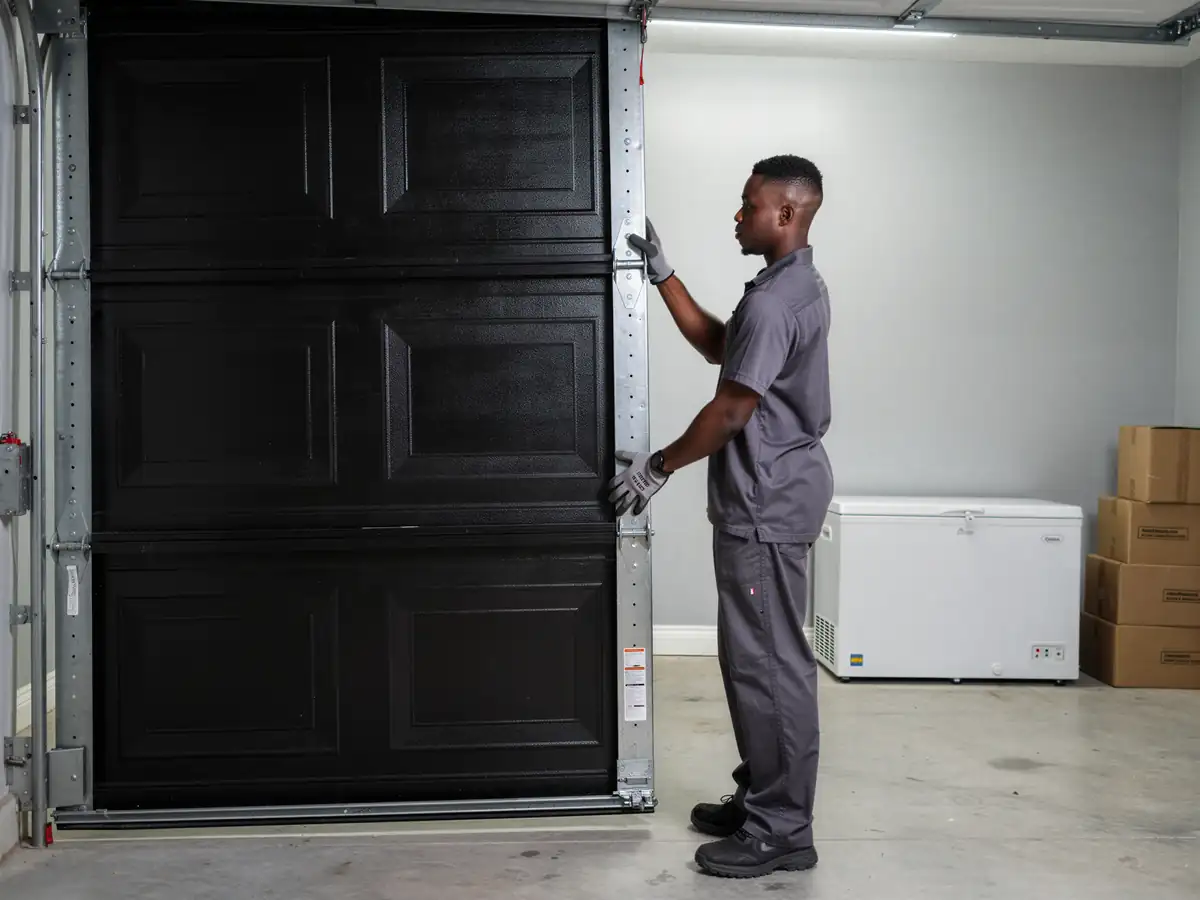
Here's the honest limit: once a door has come off both rollers on one side, or the track itself is visibly bent or pulled away from the wall, that's not a homeowner repair. It needs someone who can get the door back into the track safely under control, re-square it, and check that the opener isn't now straining against a door that's slightly twisted. Trying to wrestle it back into the rail yourself is how a repair job becomes a replacement job.
What Causes It Around Here
Most of the housing stock in this area went up between 1953 and 1992, with the median home dating to 1971, which means a lot of original track hardware is now pushing fifty years old. Across the 28 communities this crew covers, the dominant era is 1960s and 70s construction, the same decades that used steel tracks and lag-bolted brackets never designed for the loads of today's heavier insulated doors going on as replacements.
The mild temperate climate here means track failure is rarely about ice jamming the door shut the way it is up north - it's almost always a bent rail, a stripped bracket, or a roller that's worn its track groove wider than it should be. With 42,128 owner-occupied houses across this service area, a meaningful share of them are hitting the age where the original track brackets have simply worked loose from the framing after decades of the door opening and closing.
A second common cause is a replacement door that's heavier than the original but was hung on the original track and brackets - that mismatch puts more side-load on hardware sized for a lighter door, and over time the track walks out of alignment. Neither of these is a dramatic event. It's wear, not weather, doing the damage here.
How It Shows Up
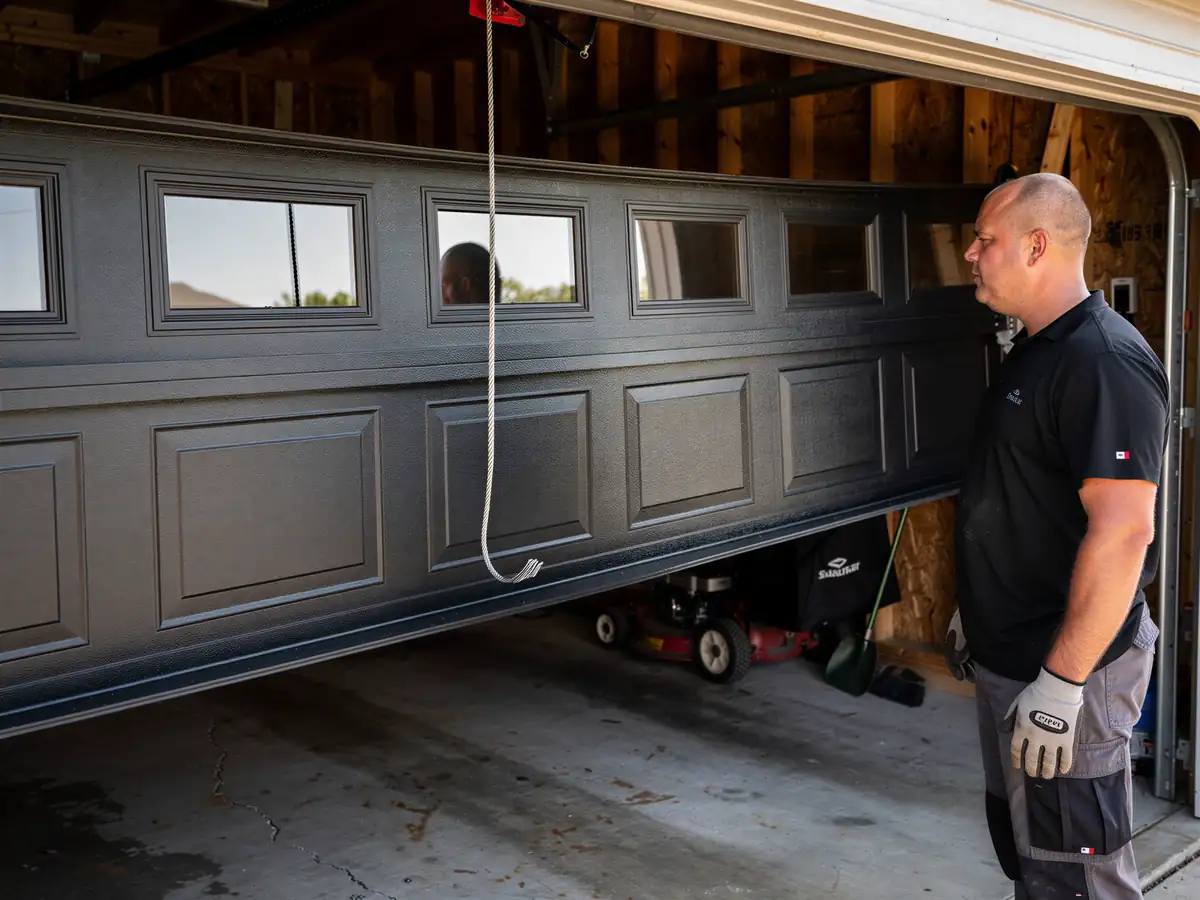
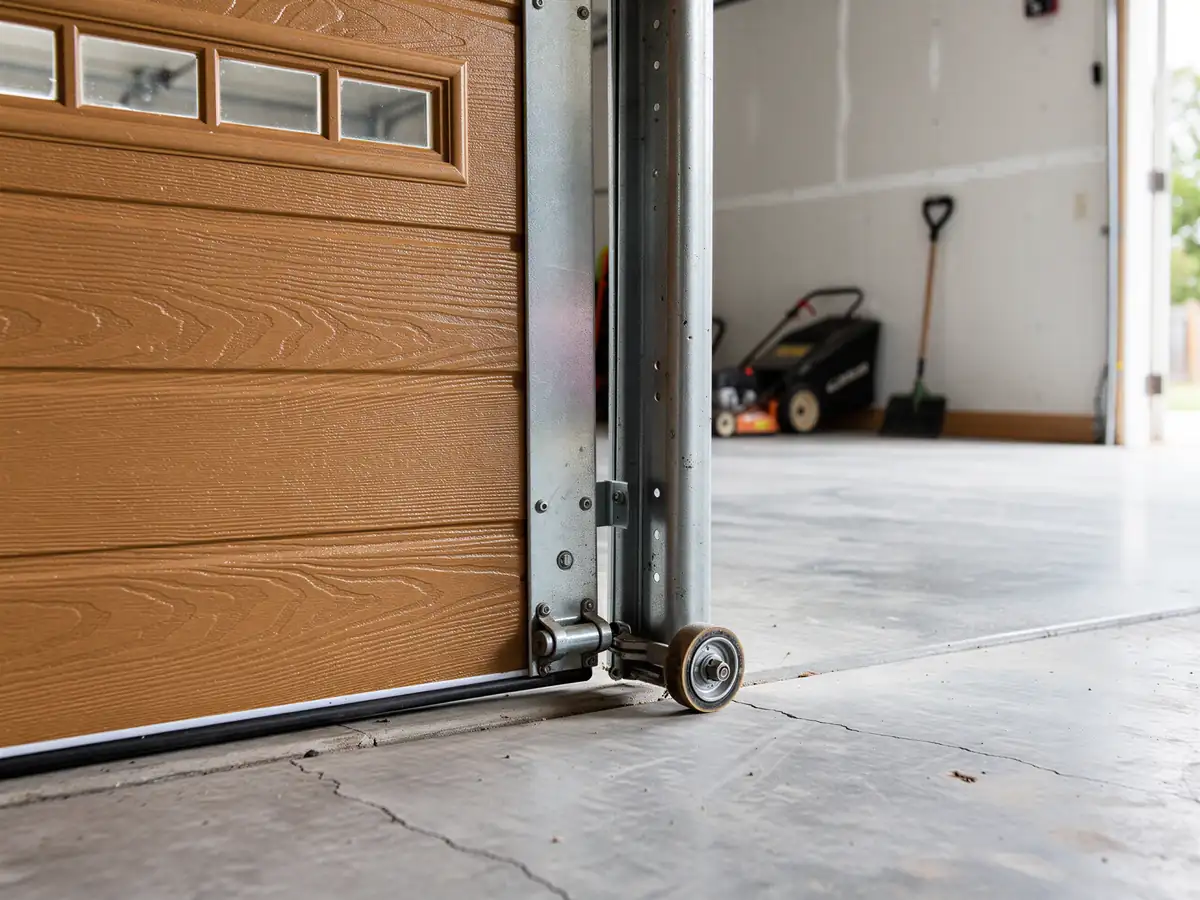
The most obvious sign is a visible gap between the roller and the track on one side, usually near the bottom section
Where you can see daylight between the wheel and the rail it's supposed to be running in. Before it gets that bad, you'll often hear it first - a grinding or scraping noise as the door travels, different from the normal rumble of a healthy track.
You might also notice the door starts to bind partway through its travel
Stopping and reversing on its own if it's on an opener with force-sensing, or needing a hard push partway if you're lifting manually. Panels can look slightly racked, meaning the door isn't square in the opening anymore, even though no single piece looks broken.
If you catch it early
One bracket pulled a quarter inch off the wall, one roller riding the edge of the track - it's a small job. If you wait until the door has come fully off the rail and is resting on the spring or against the opener arm, it's a bigger one. The gap doesn't close itself, and it doesn't get quieter with time.