How It Shows Up
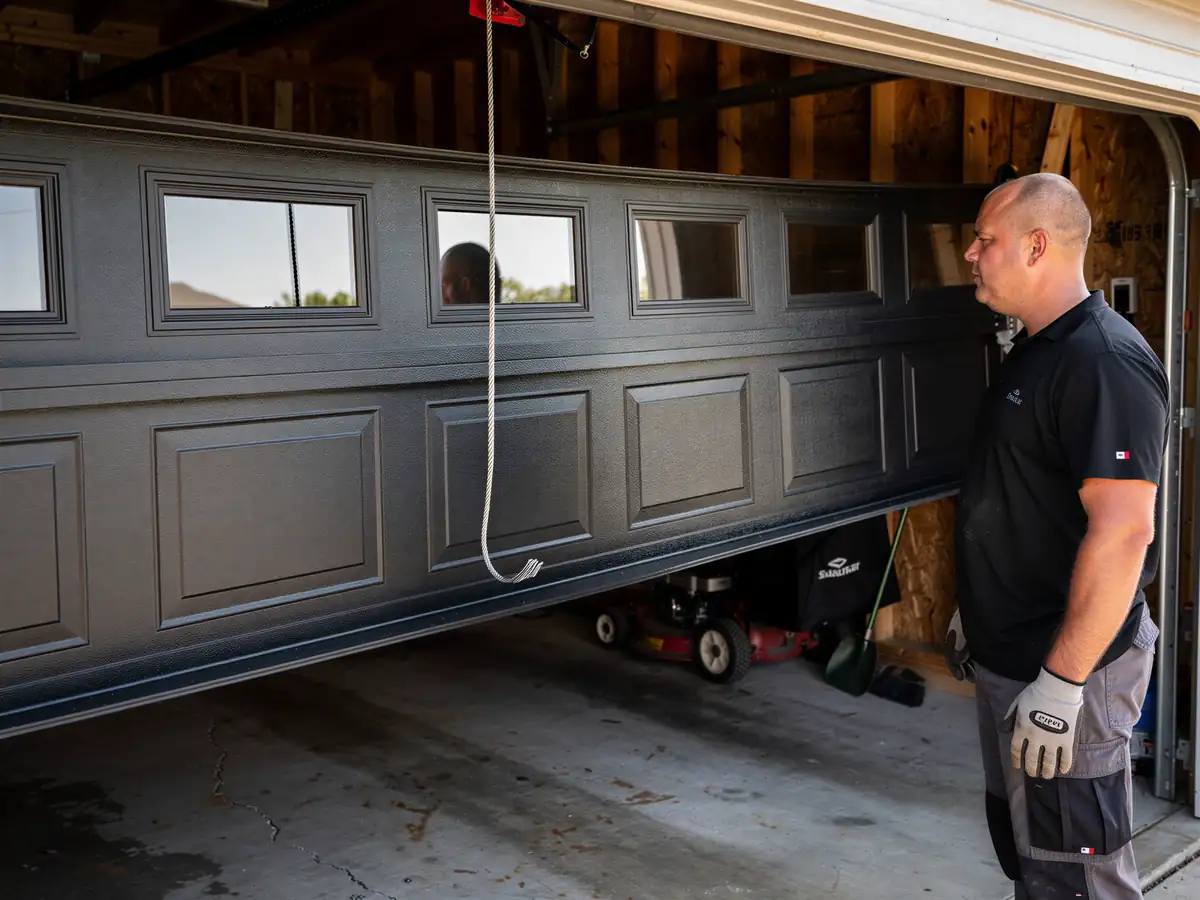
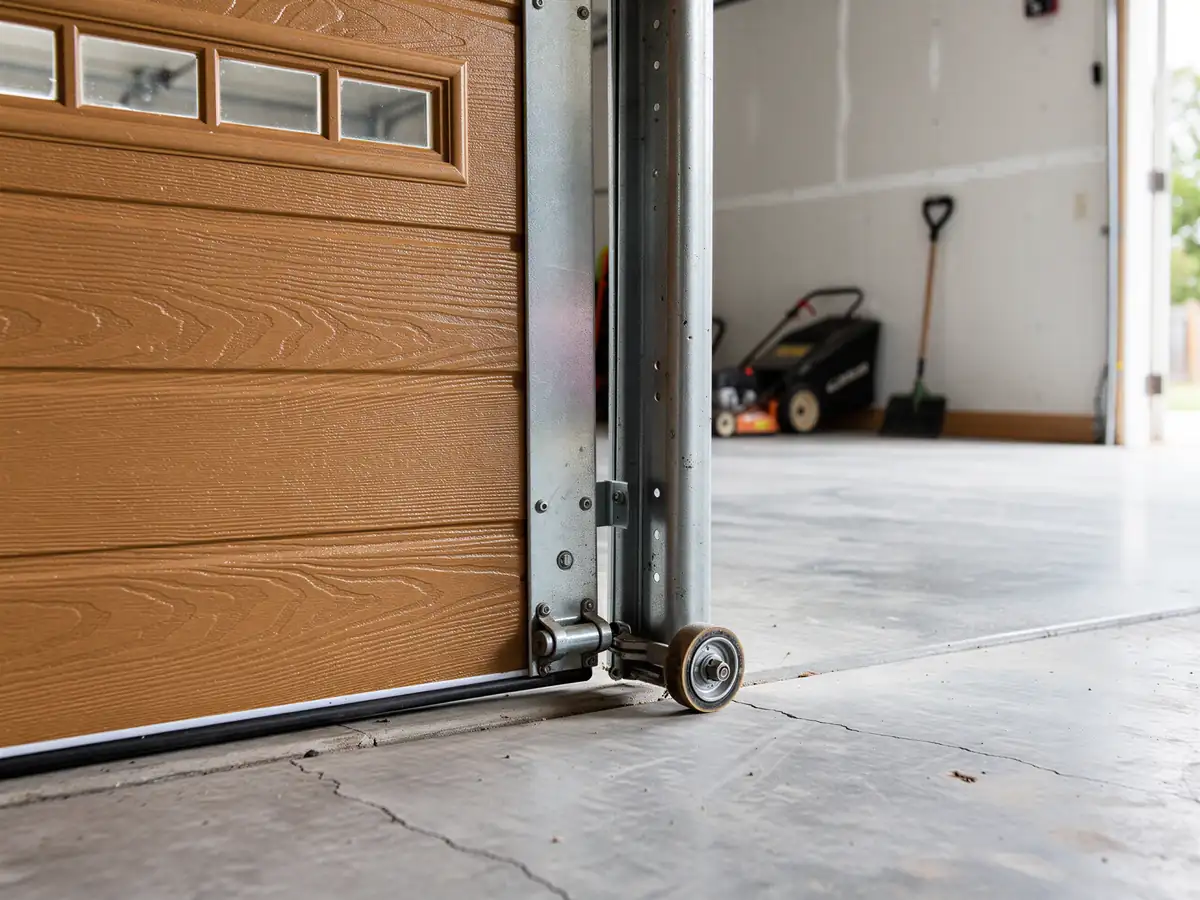
In the mild, humid climate this area sits in, salt air and moisture work on galvanized track hardware slower than they do on raw steel, but they still work on it - bracket bolts loosen, track seams corrode at the mounting points, and a door that's run a few thousand cycles since 1981 starts to walk sideways off true before anyone notices. The usual tell is a door that catches partway up, or one bottom corner that drags against the track wall while the other side runs free. Sometimes it's sudden - a roller snaps out of the track and the door drops crooked mid-cycle. More often it's gradual: a scrape you've been ignoring for weeks that finally turns into a door stuck six inches off the floor, tilted, with the opener straining against a track it can't push past.
What the Repair Takes
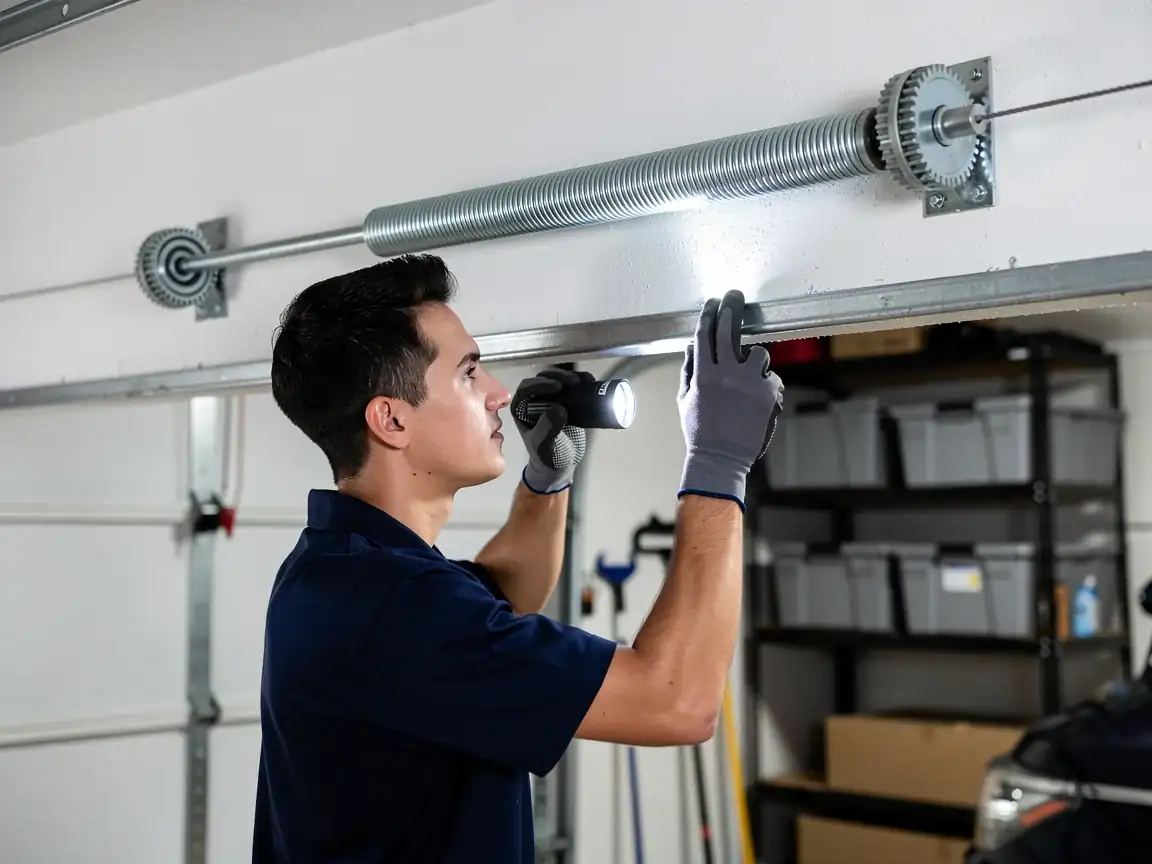
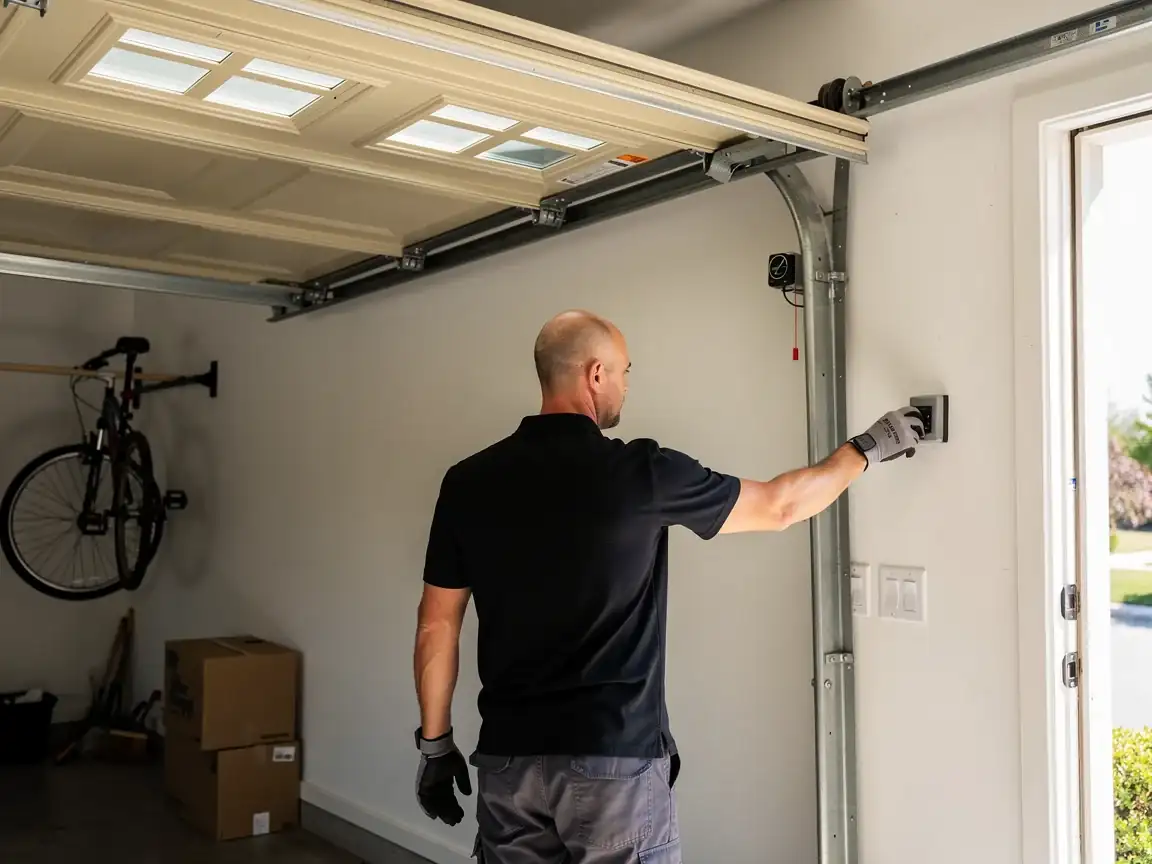
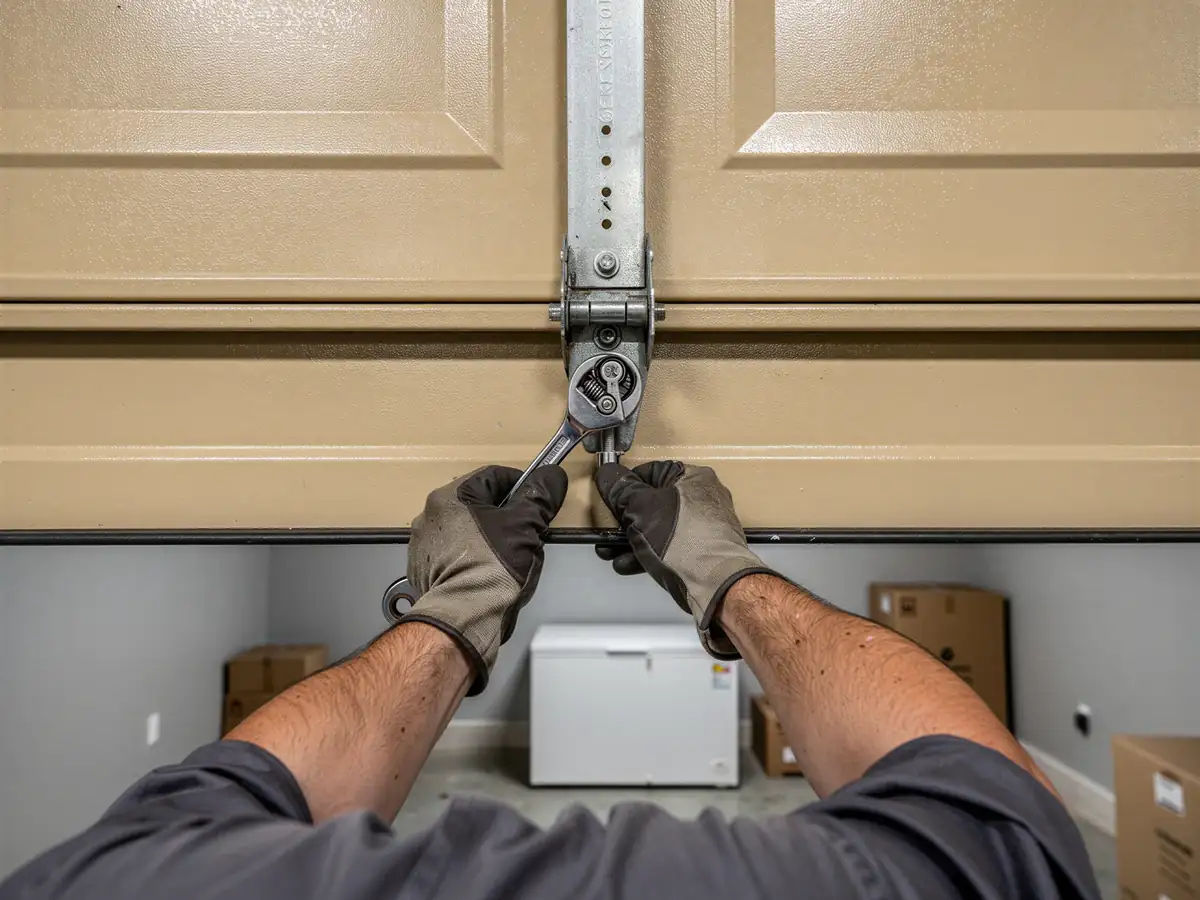
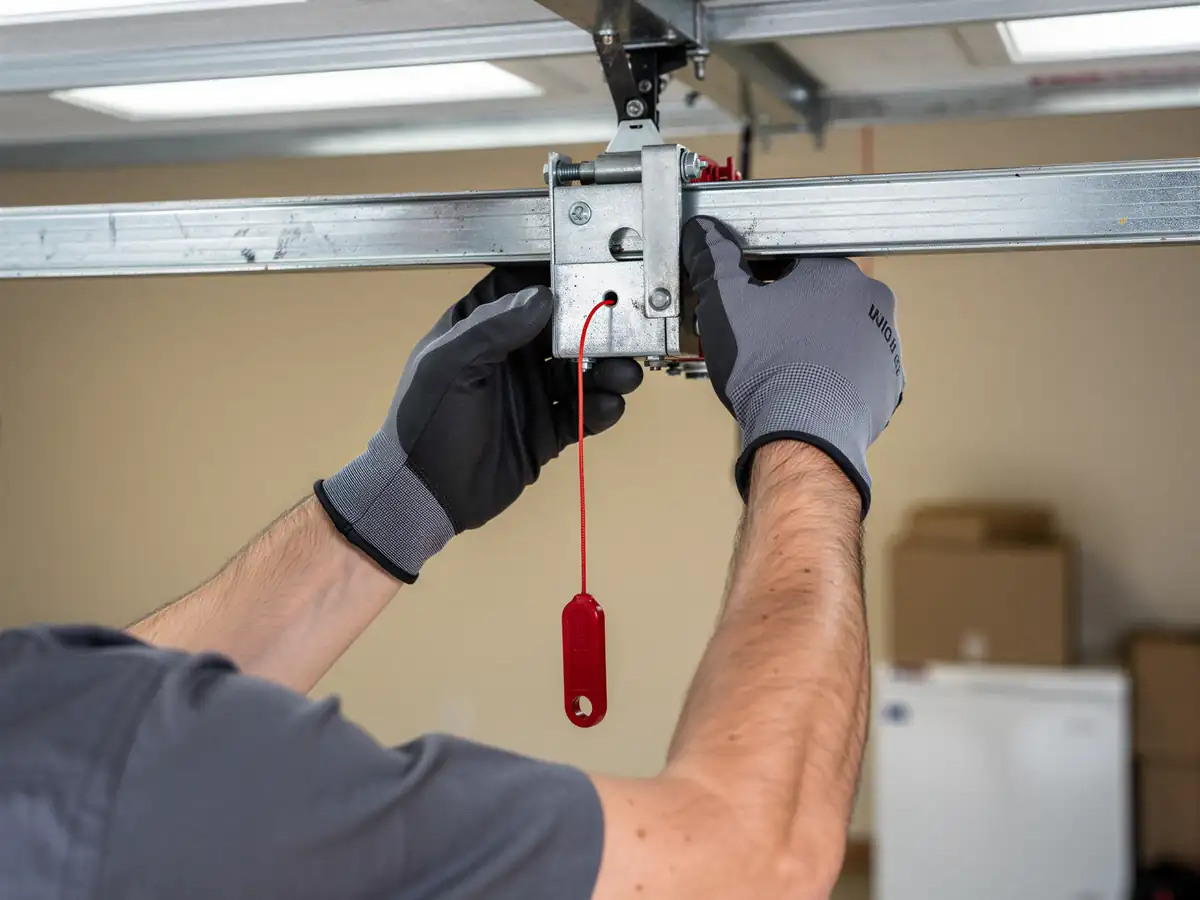
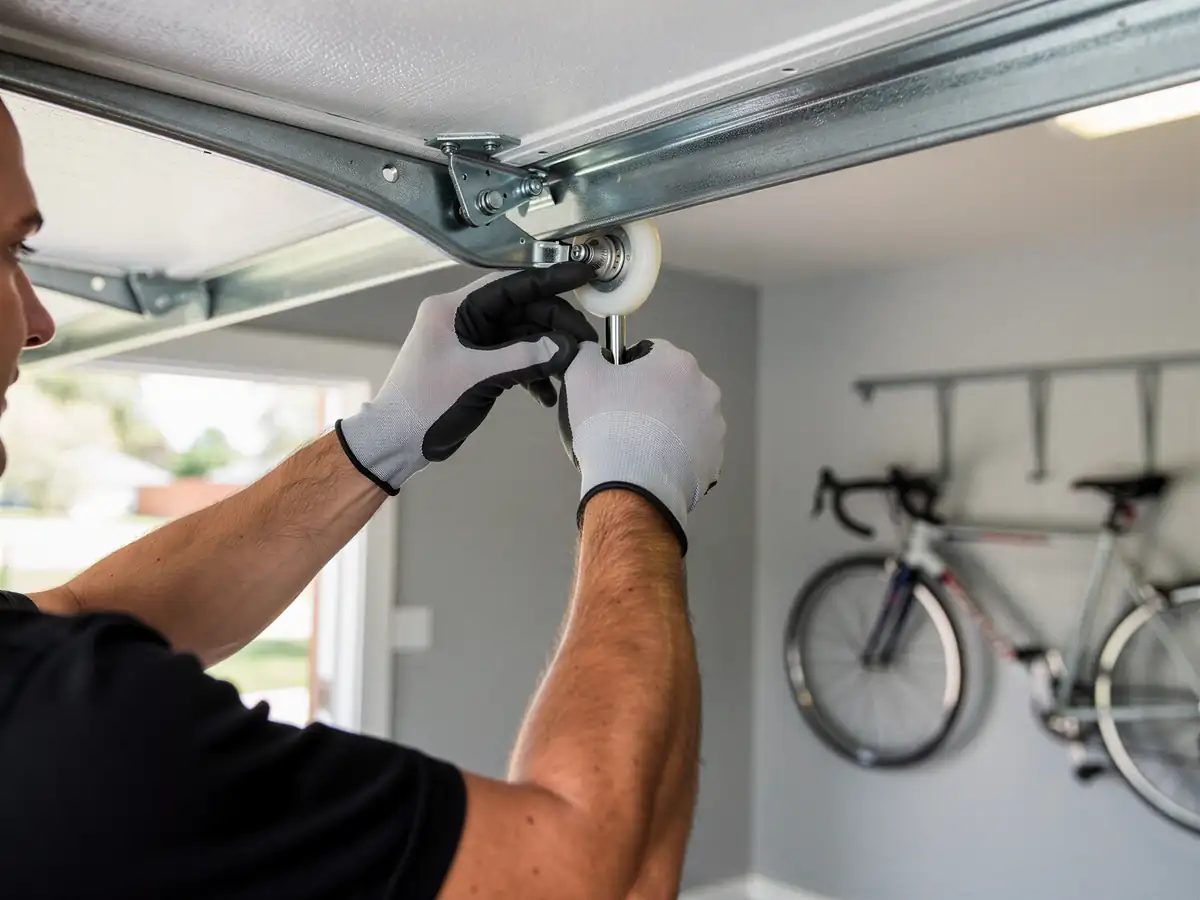
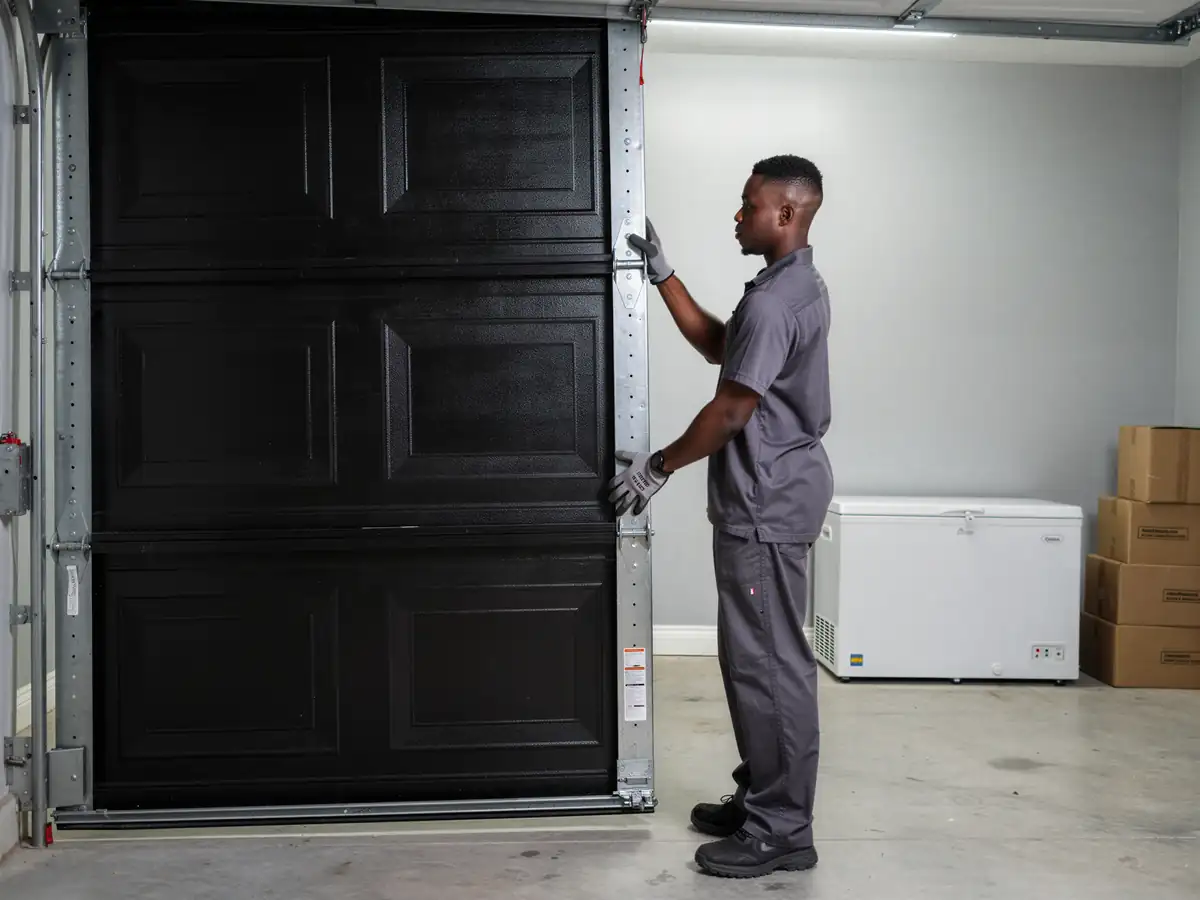
Getting a door back on track starts with finding why it left in the first place, not just shoving it back into the channel. On the standard-width doors common to houses built here in the early 1980s, that's usually a bent track section or a worn roller that let the panel drift. We realign or replace the track section, swap any rollers that are flat-spotted or cracked, and check the cable tension on both sides before we run the door through a full cycle test. If the track itself is bent badly enough - usually from a car bumping it or years of a loose bracket letting it flex - bending it back isn't worth the labor; a new section costs less than the time it takes to coax a damaged one straight, and we'll say so rather than charge you for the attempt.