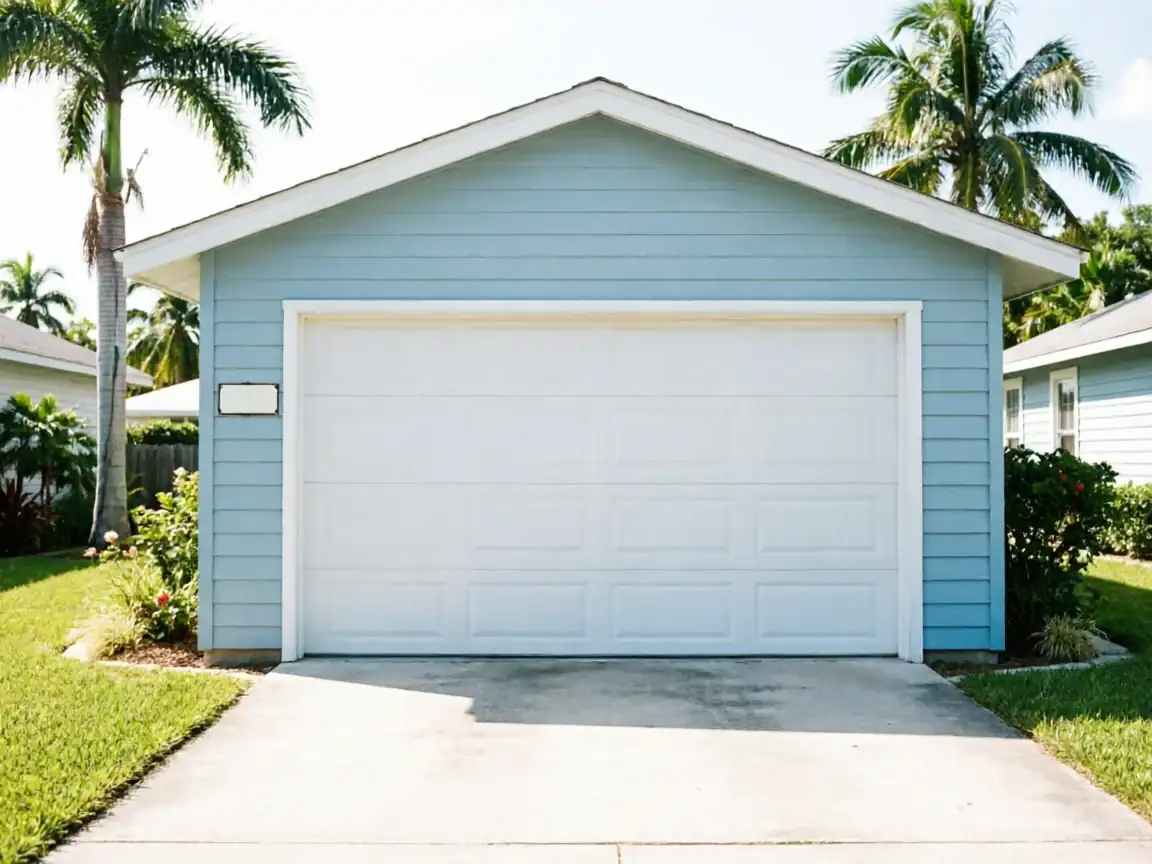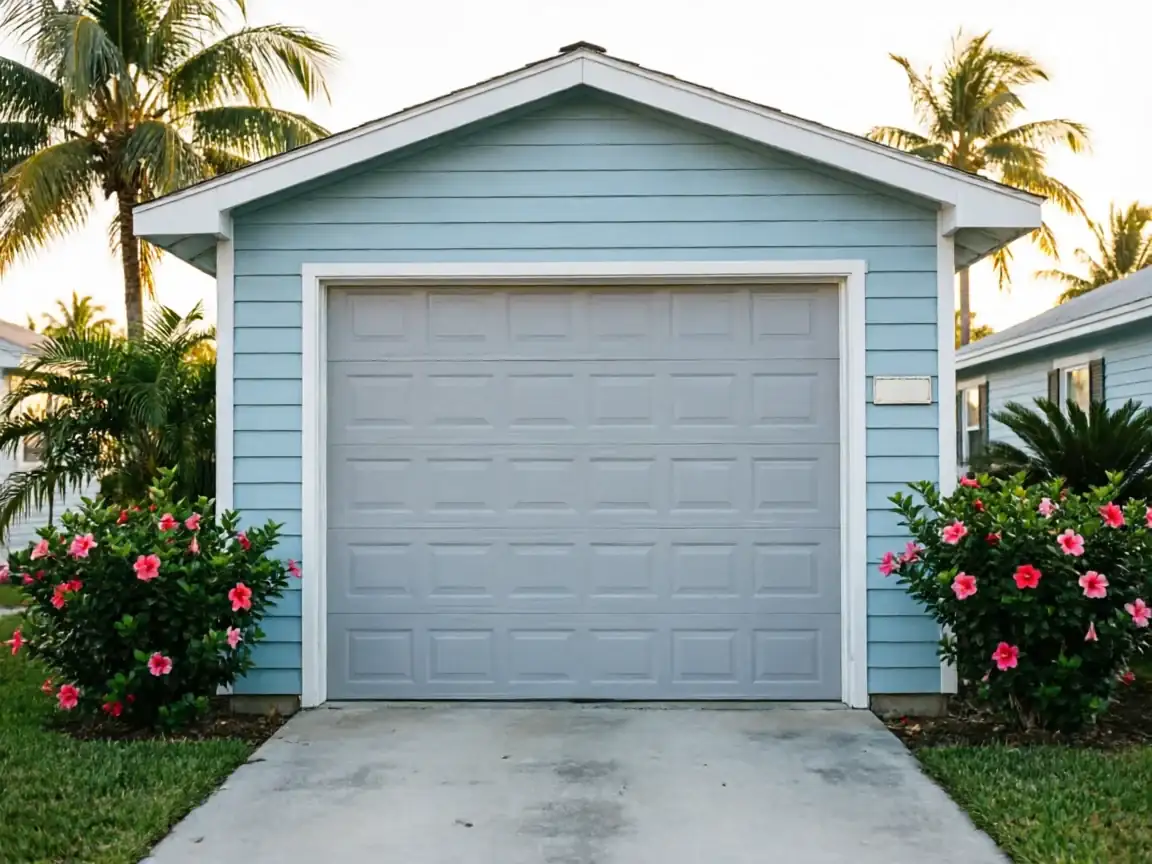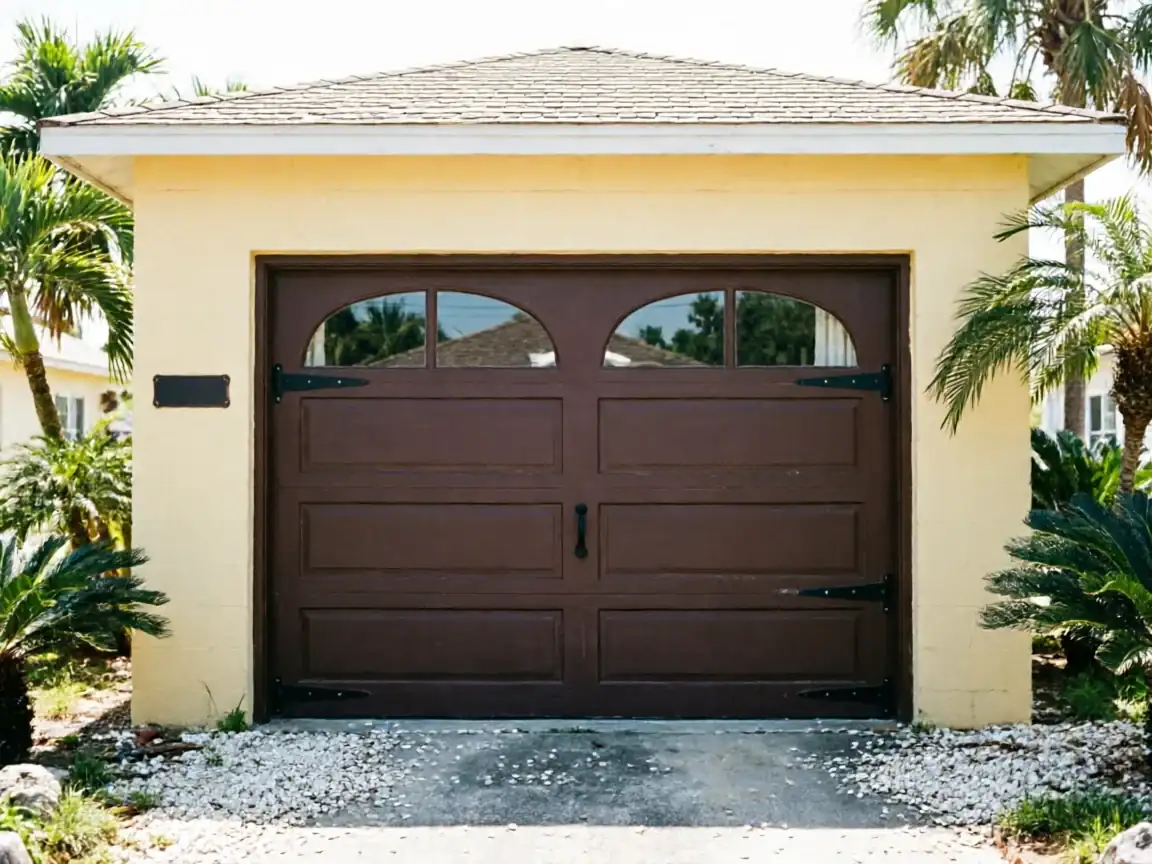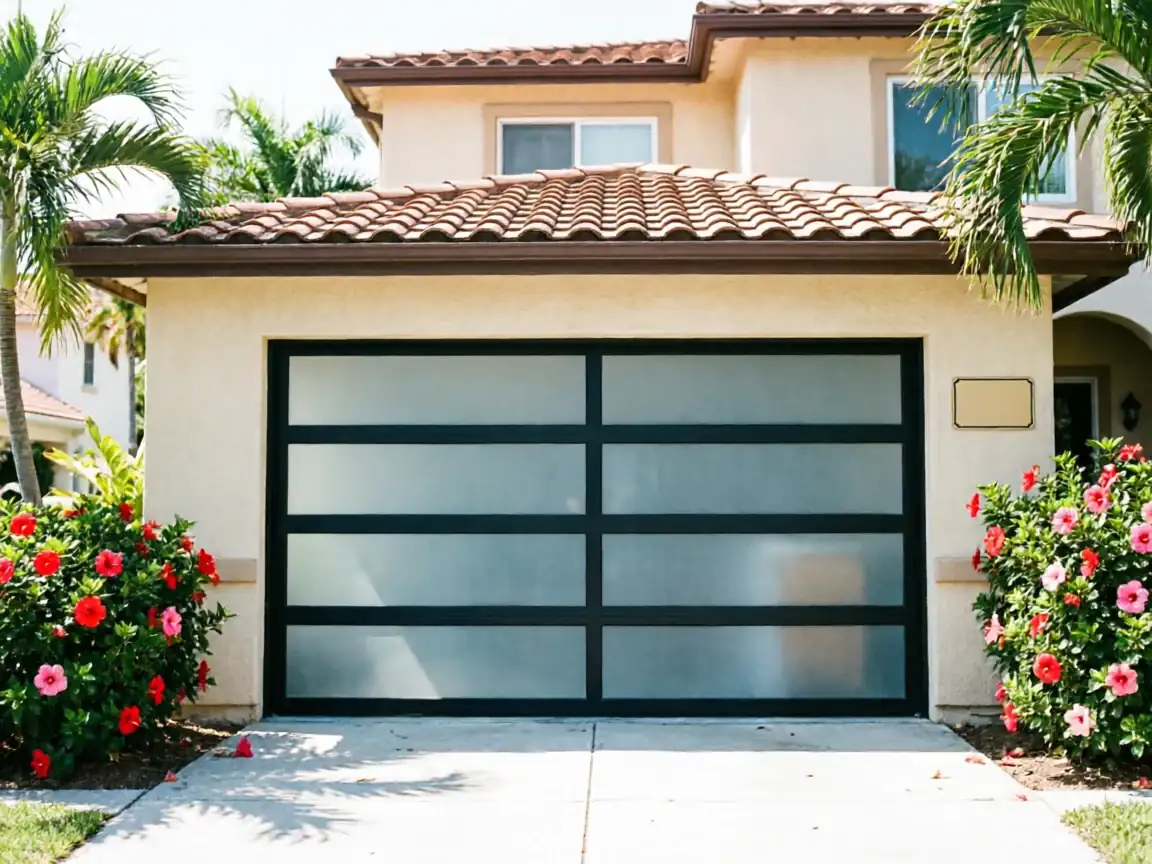
How It Shows Up
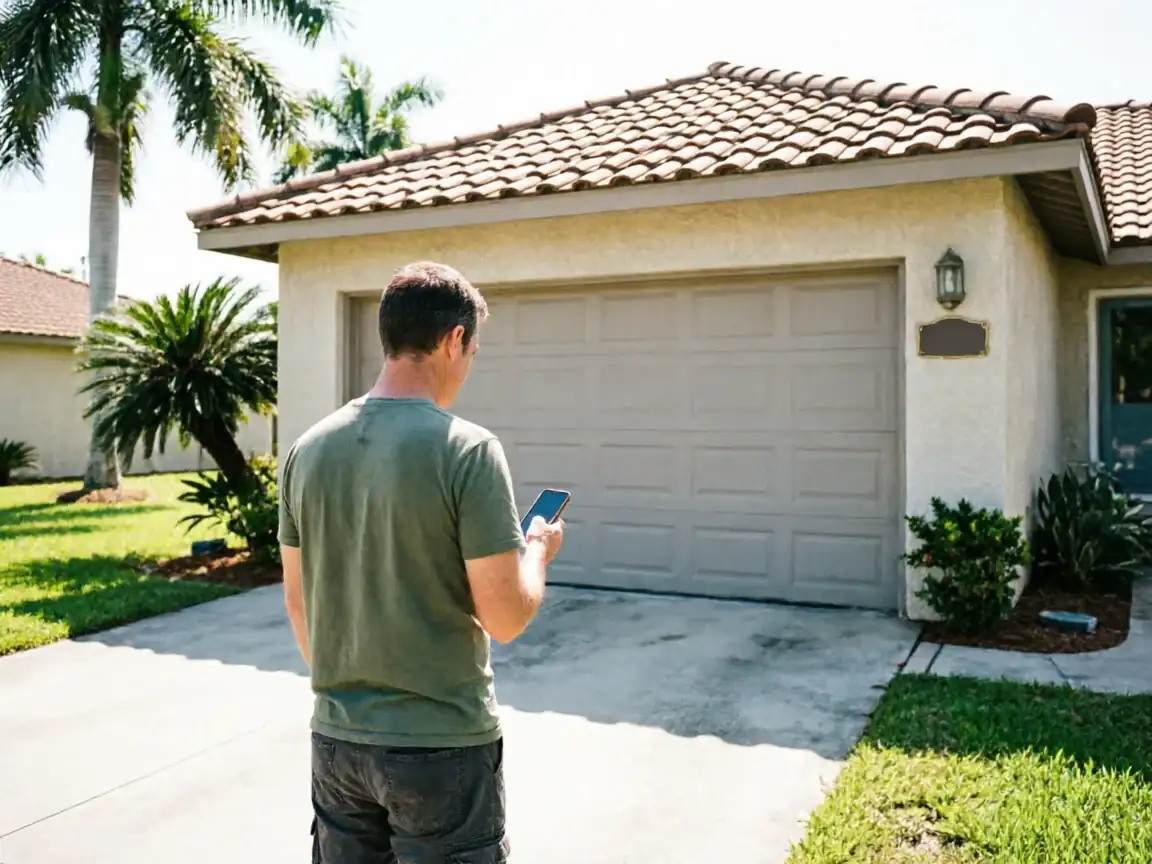
Most calls out of Ojus start the same way
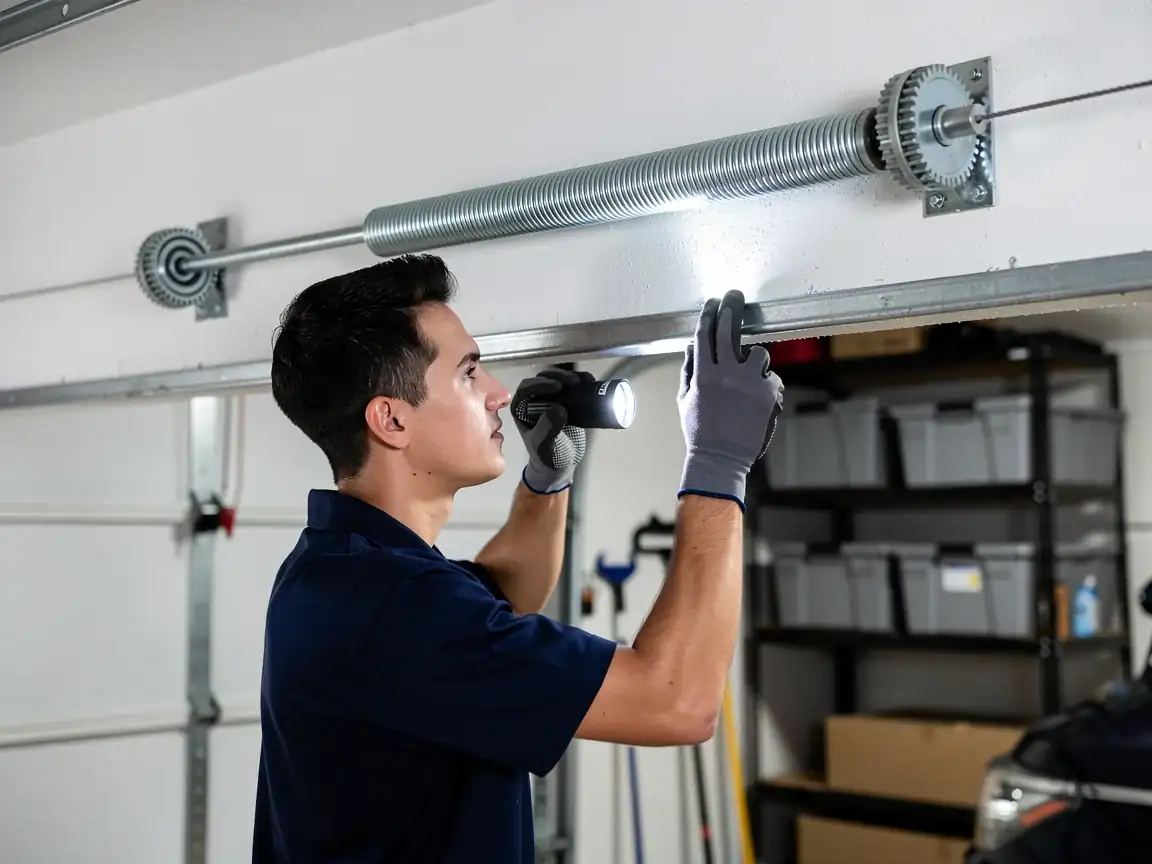
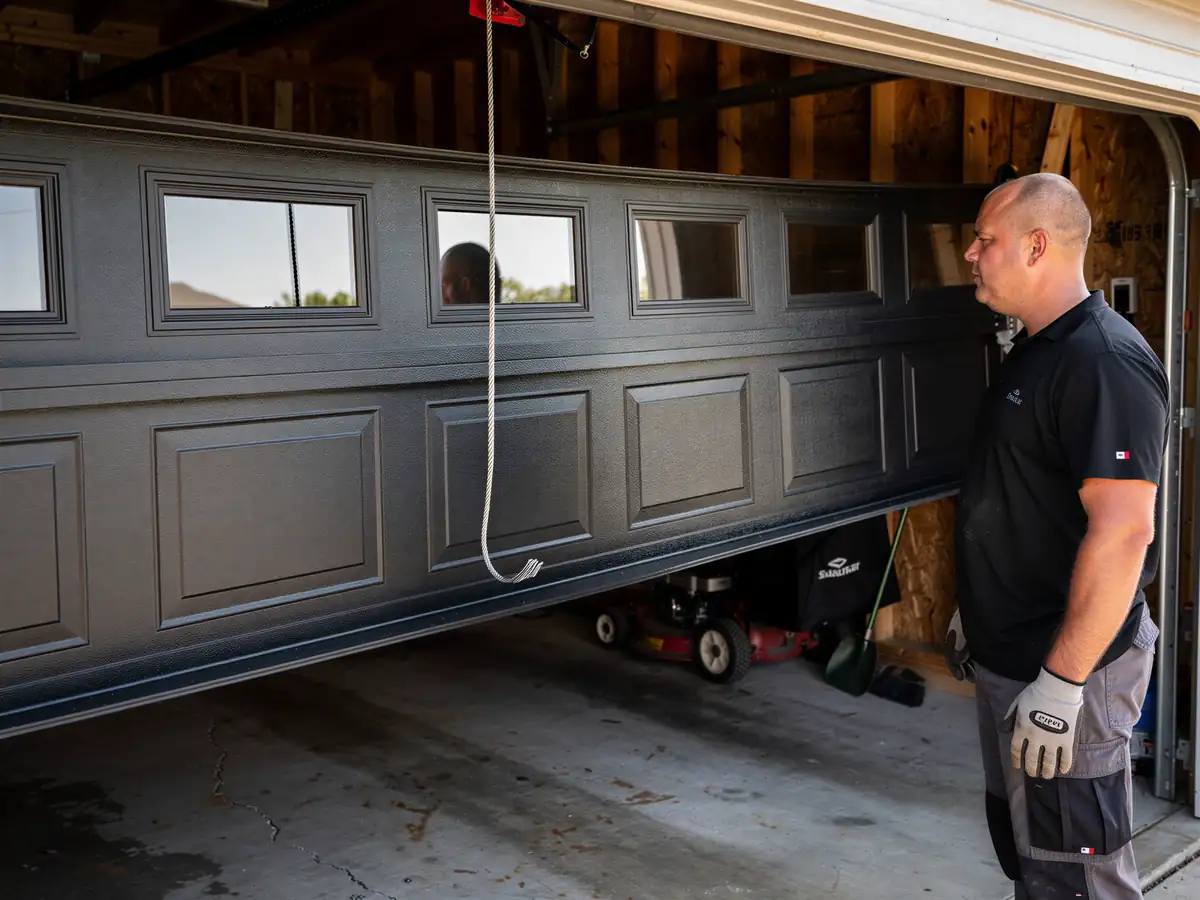
A door that won't lift past a foot, or one that slams down on its own. That's almost always a broken torsion spring, and in this neighborhood it's not a surprise - the housing stock here went up right around 1970, which puts a lot of these springs at 50-plus years old even with a replacement or two along the way. Original hardware from that era used thinner-gauge torsion bars than what gets installed today, so when they go, they tend to go without much warning.
The second most common issue is a track that's walked out of alignment
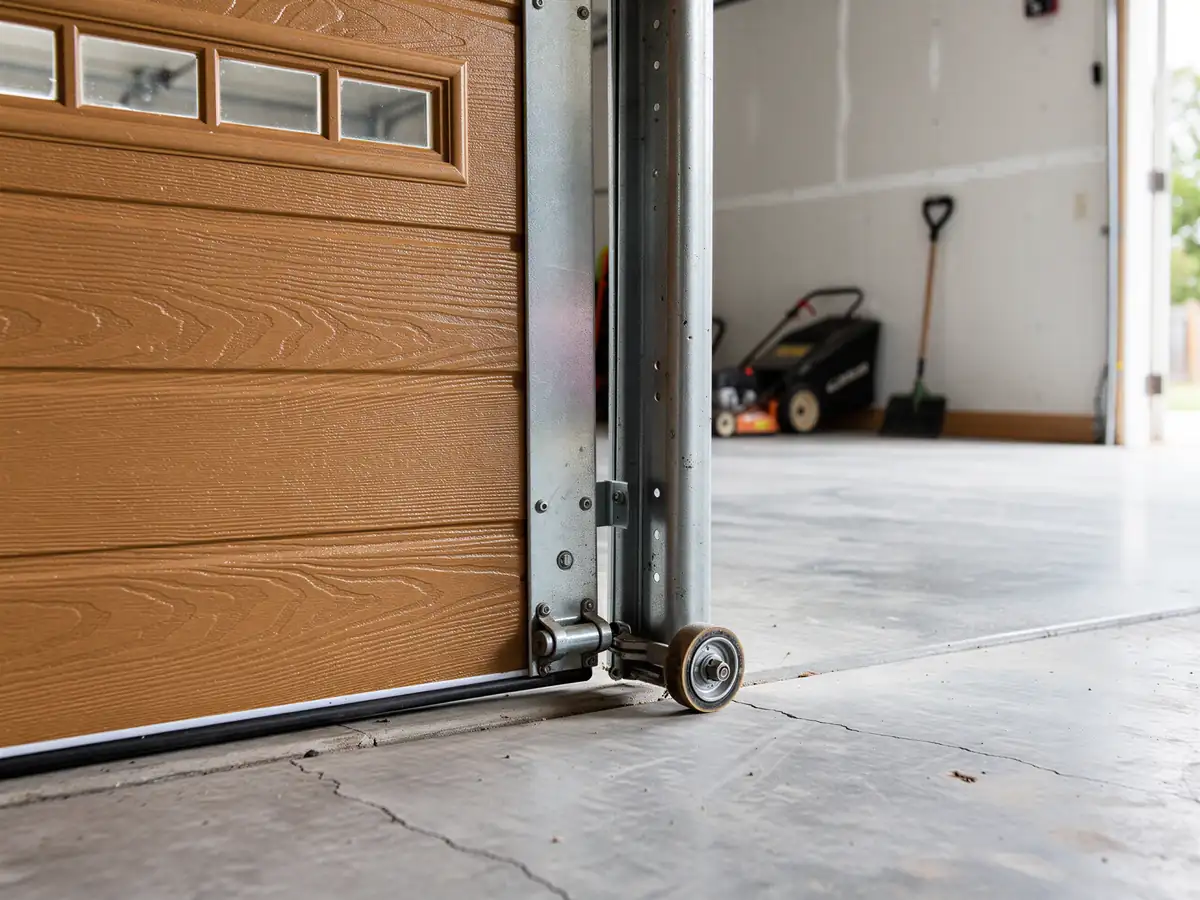
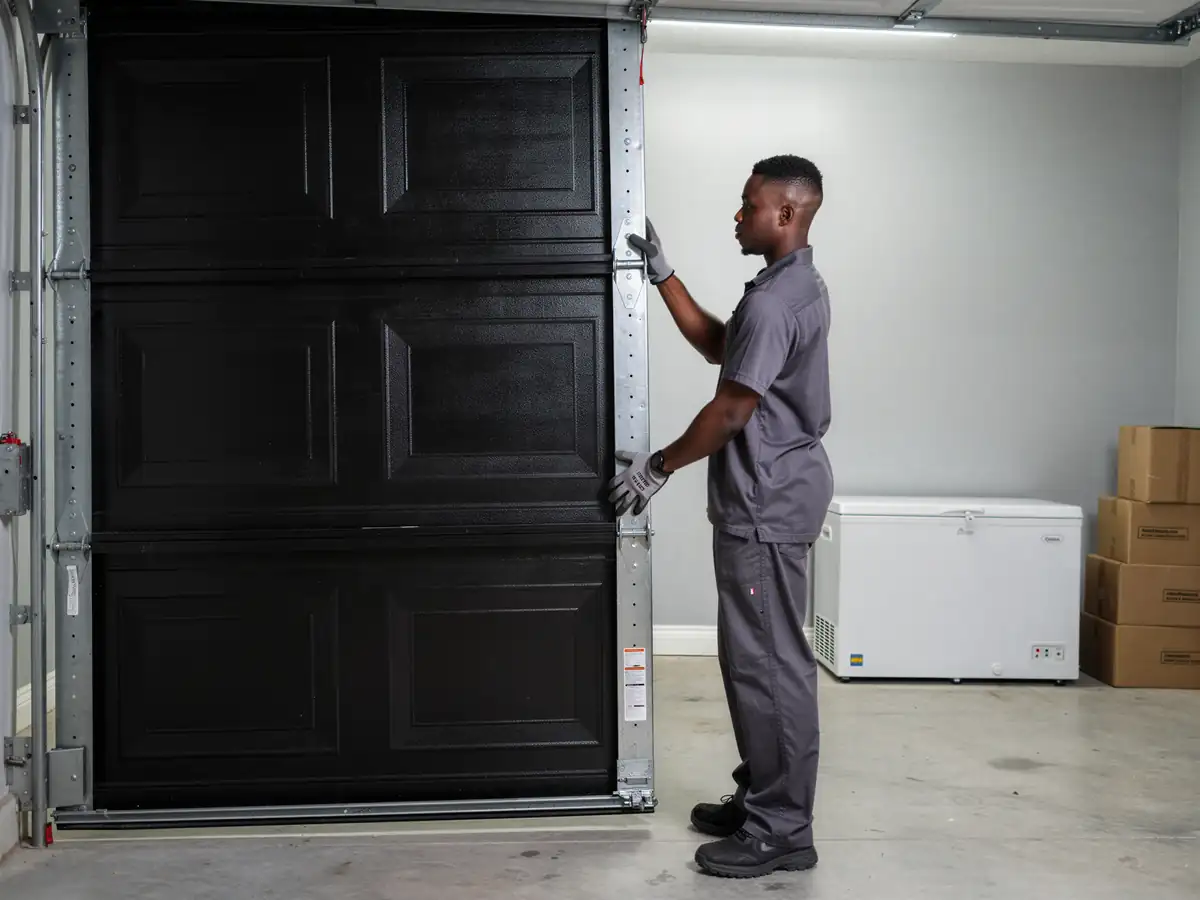
Steel doors from the 1970s build wave on older tracks that were never adjusted for today's heavier insulated panels if a previous owner upgraded the door but kept the frame. You'll notice it as a door that rattles hard on the way up, or rollers that pop out of the track on one side. Either way, it's a hardware-era problem as much as a wear problem - the kind you see on a street where every house went up within a few years of the next one.
What It Costs
We don't post a flat number for Ojus because the fix depends on what's actually failed - a spring job is a different bill than a full opener swap. What we can tell you is that Ojus households run a median income of $64,667, a bit higher than some of the other suburbs we work in off Aventura, and that tends to track with homes that already got one opener upgrade along the way. If yours hasn't, the repair is usually simpler and cheaper: original hardware is often easier to diagnose than a half-modernized system with mismatched parts.
The honest limitation here: if your door is original to a 1970-era build and the track, springs, and opener are all failing at once, patching one part at a time can cost more than replacing the unit. We'll tell you straight when that line gets crossed instead of running up a repair bill on a door that's done.
What the Repair Takes
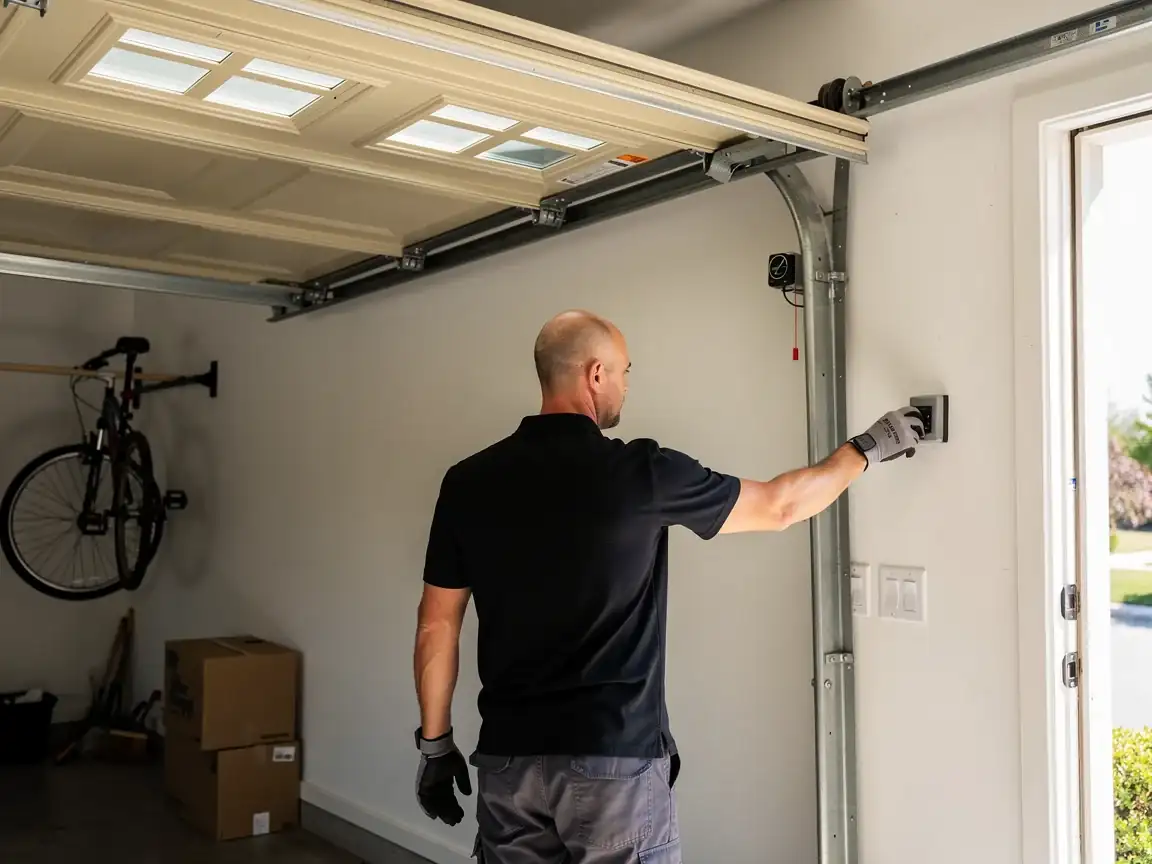
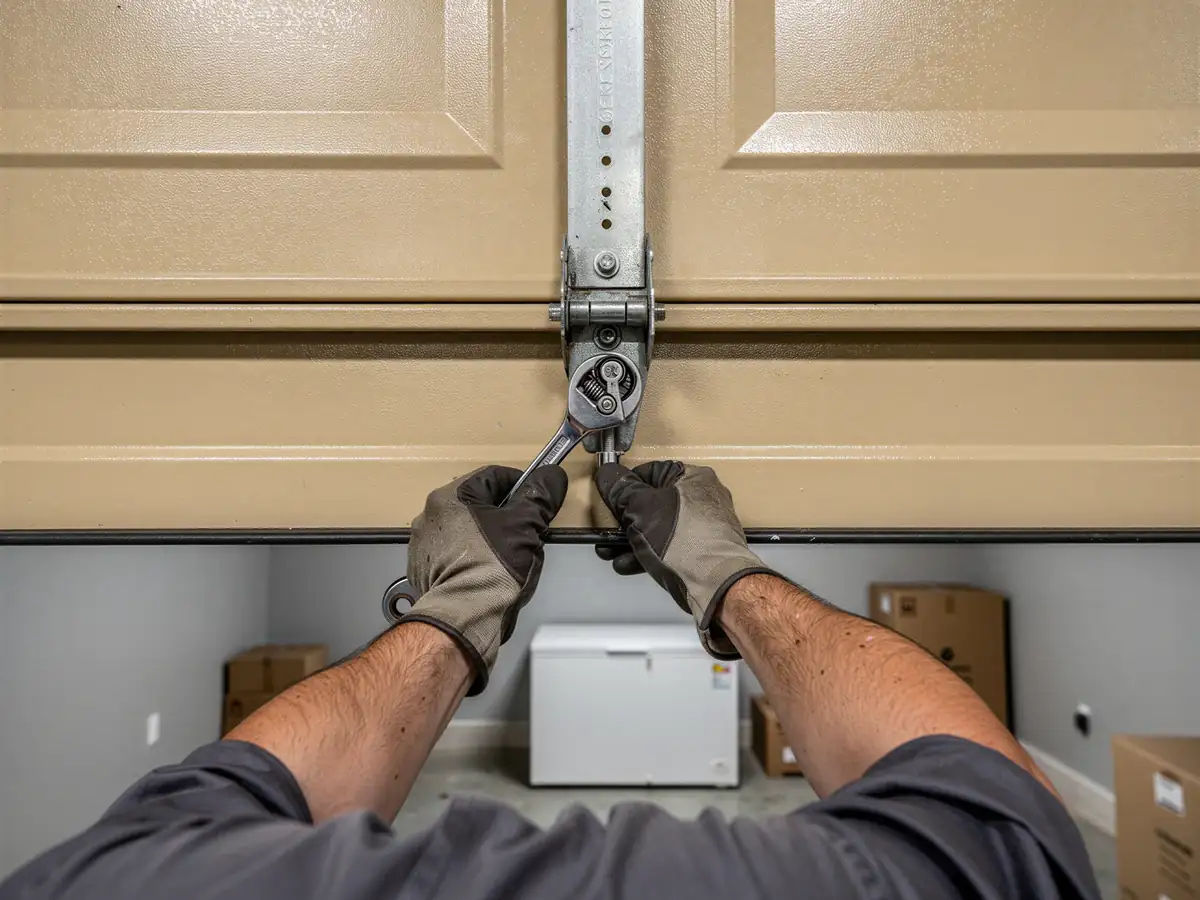
A straightforward spring or cable replacement on an Ojus door is usually a same-visit job once we're on site - we bring stock torsion springs sized for the standard 1970s single and double door openings common in this area. Where it takes longer is when the track has been bent or the opener's drive gear has stripped, which means pulling the unit apart to confirm before we order the part.
We travel the 2 miles from our Aventura base for every Ojus call, so there's no local branch stock to pull from on-site - what's not in the truck gets ordered same-day where the part is common, or scheduled for a return trip if it's a less common opener model. We'd rather tell you that up front than promise a one-visit fix we can't guarantee.
How Long You Are Without the Door
For the common failures
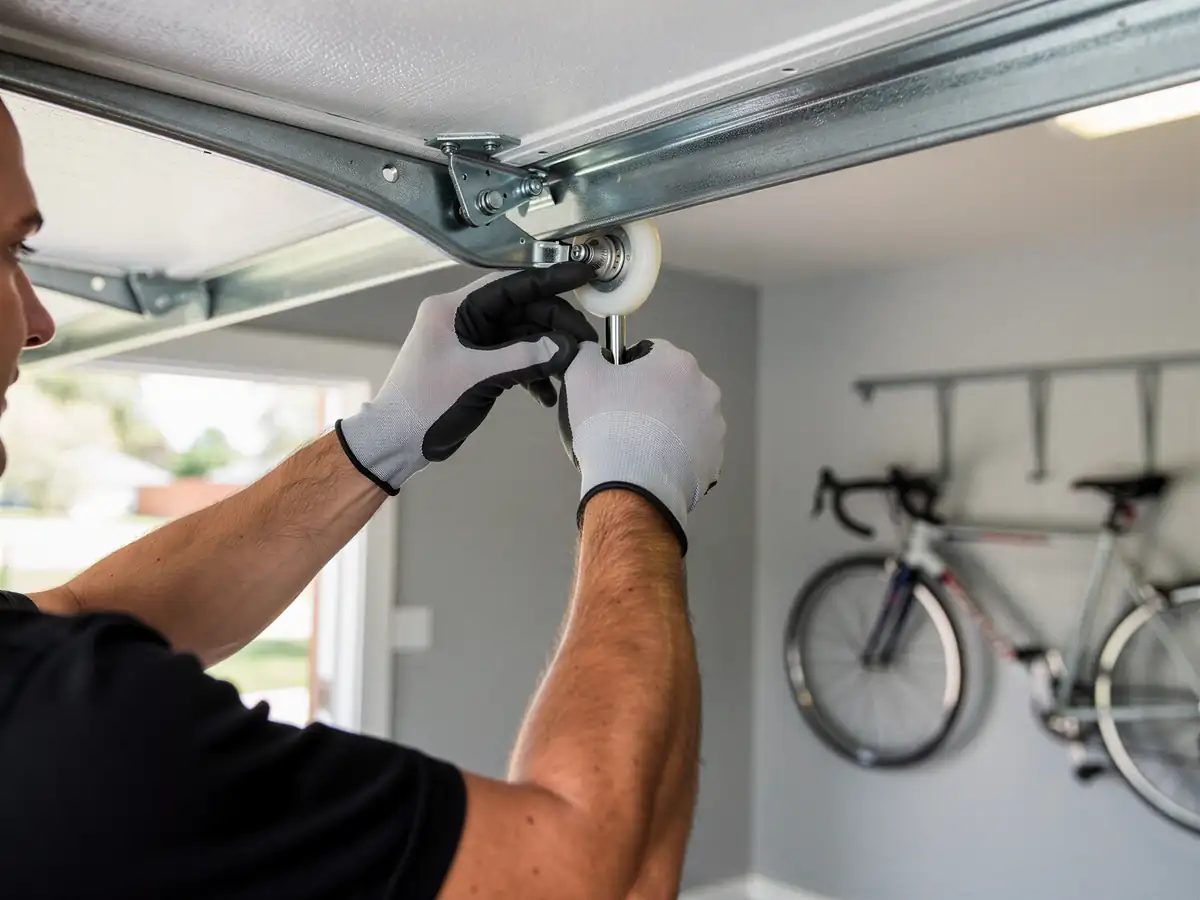
Spring, cable, roller, or a misaligned track - you're looking at a single visit, done the same day we're there. Opener boards and rare drive gears are the exception, since those aren't something we carry for every make in the truck.
What changes the math in Ojus specifically is the age of the hardware
A door with original 1970-era tracking sometimes needs more than a spot fix once we're inside the mechanism - a bent track section can hide a second problem, like a worn bottom bracket, that only shows up mid-repair. We'll always tell you before we start if we think the job is going to run past the first visit, rather than surprise you with it.
What Causes It Around Here
Ojus sits in the mild temperate band like the rest of the area we cover, so you're not dealing with freeze-thaw cycles that crack concrete slabs or seize up hardware the way colder climates do. What you are dealing with is age: a median build year of 1970 means a lot of these doors and their hardware have been through five decades of South Florida humidity, which is hard on unsealed steel tracks and springs even without hard freezes.
Salt air isn't a factor this far inland the way it is closer to the coast, but humidity-driven rust on older galvanized hardware still shows up, especially on doors that haven't been serviced since the original install. Combine that with 6,818 households in an area built within a tight few decades, and you get a pattern: when one door on a block fails from age, the neighbor's often isn't far behind.